
Is Functional Training The Missing Piece In Your Fitness Routine?

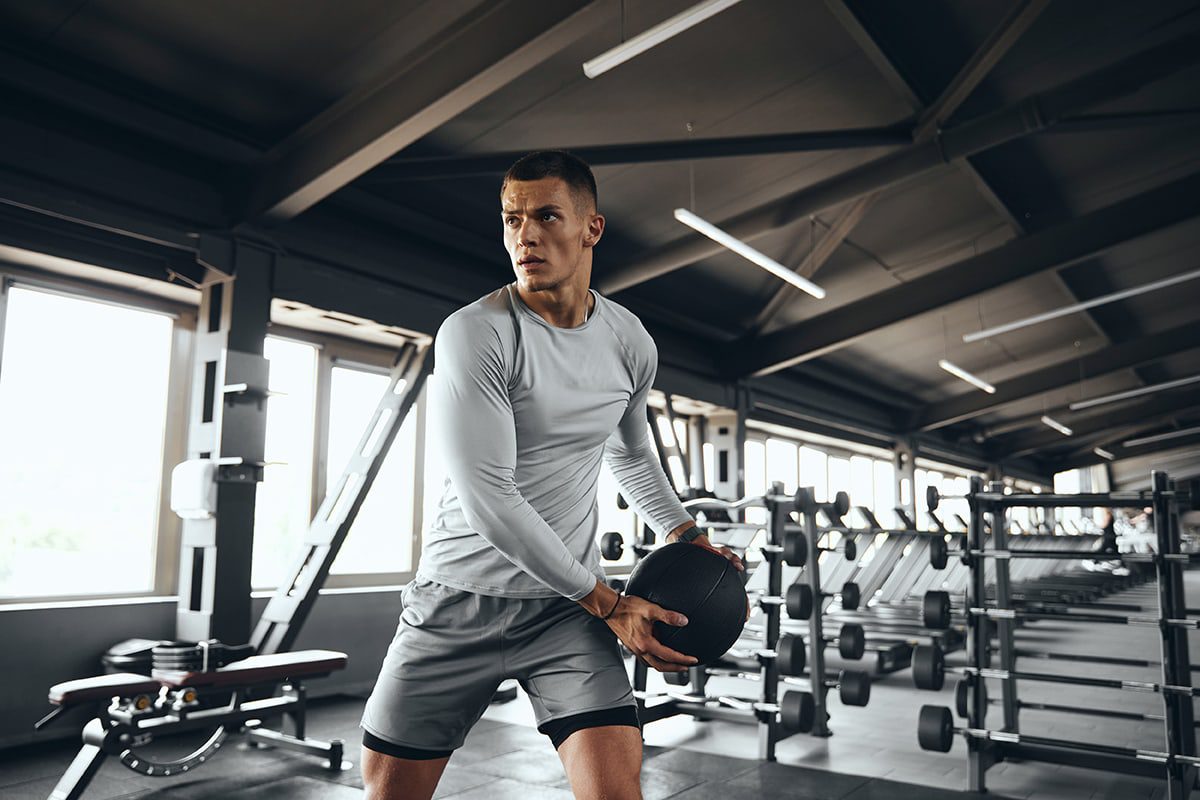
There is a particular frustration that tends to emerge around the two or three year mark of consistent gym training. You are stronger. The numbers on the bar have gone up. And yet something feels off: a nagging tightness in one hip, a lower back that complains after long days at a desk, a vague sense that the fitness you have built in the gym does not quite translate into how your body feels in the rest of your life.
This disconnect is exactly what functional training sets out to address. And it goes some way to explaining why the American College of Sports Medicine named functional fitness as one of the top trends in its 2026 worldwide survey of exercise professionals: not a passing craze, but a genuine recalibration of what we are training for.
The shift is broader than gym culture. An ageing population is increasingly aware that what matters in later life is not the size of your biceps but whether you can get off the floor without difficulty, carry shopping without pain, and move through the world with ease and confidence. For younger adults, the conversation is more about resilience and injury prevention. Both groups are arriving at the same place.
So what actually is functional training?
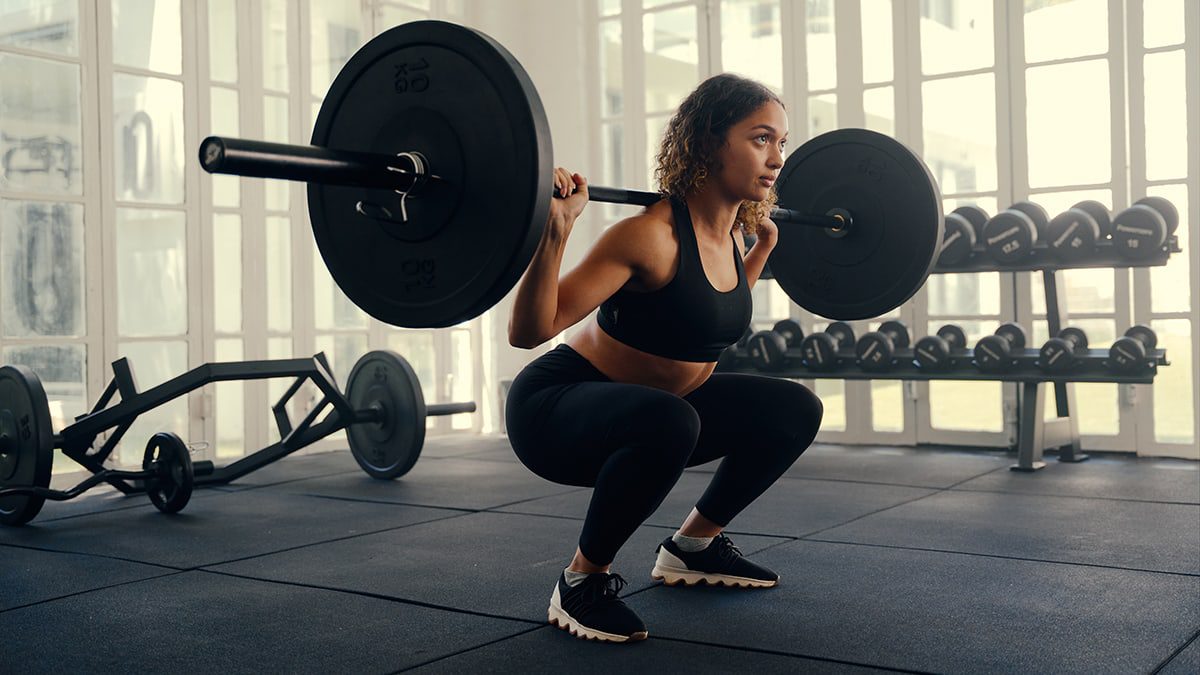
Functional training is the practice of training movement patterns rather than isolated muscles. Where a traditional bodybuilding-influenced approach might target the quadriceps with a leg extension machine, functional training would instead load a squat or a lunge: a movement that requires the quads to work in coordination with the glutes, hamstrings, core, and stabilising muscles, much as they do in any real-world context.
The core movement patterns that functional training is built around are: squat, hinge, push, pull, carry, and rotate. Every complex physical task you perform in daily life or sport is a variation or combination of these. Getting out of a chair is a squat. Lifting a bag from the floor is a hinge. Carrying a heavy object is a loaded carry. Training these patterns directly builds strength that transfers, rather than strength that exists in isolation on a machine.
This does not mean machines and isolated exercises have no place. They remain useful for targeting specific weaknesses, rehabilitating injuries, and building muscle mass in particular areas. The argument for functional training is not that isolation work is wrong, but that most people’s routines are too heavily weighted towards it, and that the movement patterns they use every day are underdeveloped as a result.
What does the evidence say?
The research base for functional training is solid, particularly around injury prevention and movement quality. A 2025 systematic review and meta-analysis published in Scientific Reports found that targeted exercise interventions emphasising core stability, resistance training, and neuromuscular control produced meaningful improvements in movement quality scores. Core stability training in particular produced the largest effect sizes, underscoring the role of trunk control in overall movement efficiency.
A separate meta-analysis found that functional correction training reduced injury risk ratios significantly among athletes, with grade B evidence supporting its use for improving fundamental movement patterns. For non-athletes, research consistently shows that functional training improves balance, coordination, and the quality of everyday movement in ways that traditional resistance training alone does not replicate.
The ACSM notes that while functional training is often associated with older adults and rehabilitation, the evidence supports its benefits across all age groups: improvements in strength, speed, power, and balance have been demonstrated in athletic populations too. The distinction is not who it is for, but what it is training. Movement quality is relevant at every stage of life.
How does it differ from what most people already do?
If your current training is built primarily around split routines targeting individual muscle groups, or if your cardio is limited to machines that fix your body in one plane of movement, you are likely missing training stimulus in several key areas.
Functional training introduces three things that traditional gym programmes often neglect. The first is multi-planar movement: training in the frontal and transverse planes (side to side, rotational) as well as the sagittal plane (forward and back) that most gym machines operate in. The second is proprioception: the body’s awareness of its position in space, which is trained by exercises that require balance and stability rather than machine-guided movement. The third is integrated core strength: not the six-pack-focused core work of crunches, but the deep stabilising function of the core that supports every compound movement and protects the spine.
Mobility training is a close companion to functional work, and the two are often confused. Mobility training focuses on the range of motion available at each joint; functional training uses and loads that range of motion under control. Both matter, and a deficit in one will limit the other.
How do you actually incorporate it?
The good news is that you do not need to overhaul your entire training programme. Functional training works best as a complement to, rather than a replacement for, whatever you are already doing. A few practical starting points:
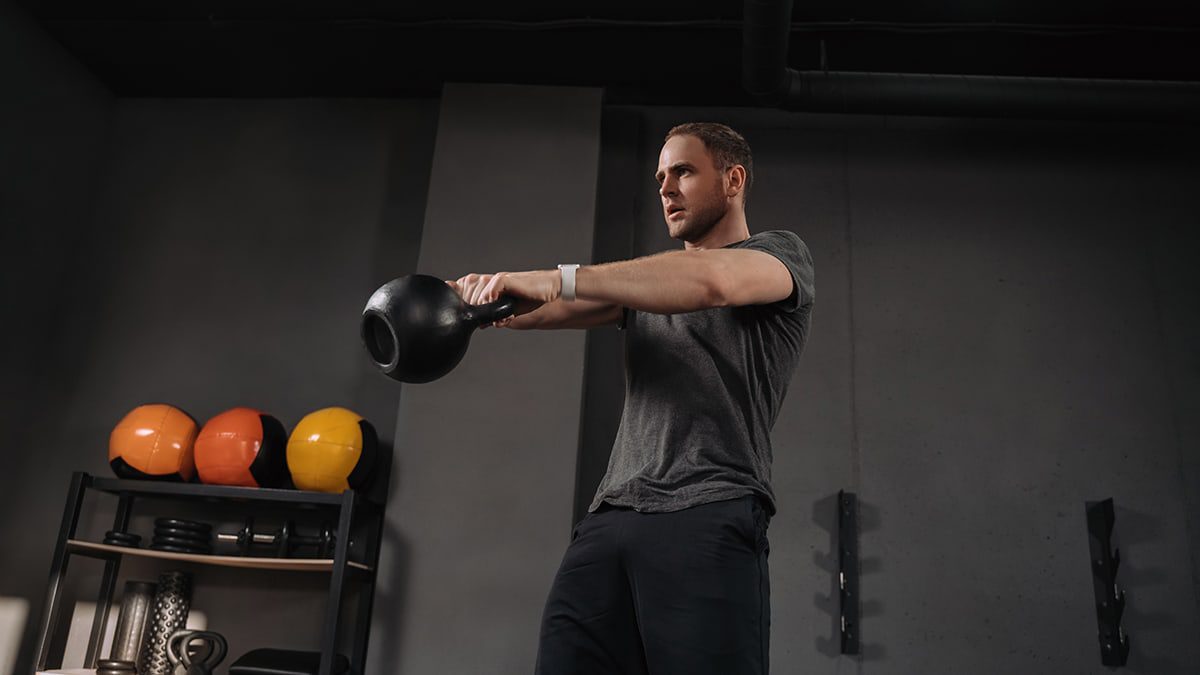
Audit your movement patterns. Look at your current training and identify which of the six fundamental patterns (squat, hinge, push, pull, carry, rotate) are present and which are absent or underrepresented. Most people who train regularly are reasonably well covered on push and pull from upper body work. Hinge movements (deadlifts, kettlebell swings, Romanian deadlifts) and loaded carries (farmer’s walks, suitcase carries) are the most commonly neglected.
Add single-leg and single-arm work. Bilateral exercises like barbell squats and bench press are valuable, but they allow the stronger side to compensate for the weaker. Single-leg squats, split squats, and single-arm pressing expose and address asymmetries that bilateral training can mask, and that often underlie overuse injuries.
Train rotation. Virtually no gym exercise involves rotation, and yet rotation is present in almost every sport and a great deal of daily movement. Pallof presses, woodchop variations, and rotational medicine ball work develop the anti-rotation stability and rotational power that gym training typically ignores.
Reconsider the gym beginner staples. Goblet squats, Romanian deadlifts, single-arm rows, and farmer’s carries are not glamorous, but they train movement patterns with a directness that many more complex exercises do not match. They also scale well: the same pattern can be loaded progressively for years.
If you are newer to structured training, full-body sessions built around these patterns are a more functional starting point than body-part splits, simply because they develop the movement vocabulary that everything else is built on.
The bottom line
Functional training is not a replacement for strength training, cardio, or any other modality you value. It is a lens through which to evaluate whether the fitness you are building is actually transferable to the life you are living.
For most people who exercise regularly, the answer to whether they are doing enough functional training is probably not quite. Not because their training is wrong, but because the movement patterns that underpin physical resilience in everyday life tend to be systematically underrepresented in standard gym programming. Adding them does not require more time, just more intention about what those sessions are training.
The goal, ultimately, is not to be fit in the gym. It is to be fit for everything else.