
Ask Dr Adam: What Are the Benefits of Taking Creatine?

If you have ever looked into creatine, you have probably encountered a version of the same claim: it helps you lift more, sprint faster, and build muscle. That is true, as far as it goes. But it is also a fairly narrow reading of a supplement with one of the broadest and most robust evidence bases in sports nutrition.
We asked Dr Adam Collins to go beyond the headlines and look at what the research actually shows.
What does the research say about performance?
The science on creatine and exercise performance is unusually consistent. Over three decades of research point in the same direction: creatine supplementation improves performance in activities that involve short, intense bursts of effort, particularly when those bursts are repeated.
Sprint times come down. Strength and power output increases. Recovery between high-intensity sets improves. “The mechanism is straightforward,” explains Dr Adam. “More creatine in the muscle means more creatine phosphate available to rapidly regenerate ATP. That allows you to sustain a higher intensity for longer before you fatigue.”
The American College of Sports Medicine has summarised the consensus plainly: “exercise involving short periods of extremely powerful activity can be enhanced, especially during repeated bouts”. Weight training, HIIT, team sports involving repeated sprinting (football, rugby, basketball), and combat sports like boxing and MMA all fall squarely into this category.

Is it only useful for power and strength?
This is where the story gets more interesting. Creatine’s reputation is built on explosive performance, but its benefits may extend further.
Creatine also plays a role in type I slow-twitch muscle fibres, specifically in helping transport ATP out of the mitochondria. This can translate into real endurance benefits. Creatine supplementation has been shown to support performance in long-distance running, cycling, and triathlon.
There is also a glycogen angle. Creatine drives water into muscle cells, and that fluid movement supports glycogen storage. Taking creatine alongside carbohydrate can increase muscle glycogen by an additional 20%, which is meaningful for anyone whose training or competition involves repeated glycogen depletion. “For endurance athletes and team sport players who train daily,” says Dr Adam, “the glycogen-sparing effect is an often-overlooked benefit.”
What about older adults?
One of the more compelling areas of creatine research involves ageing. Muscle mass, strength and function all decline naturally as we get older, a condition known as sarcopenia, and there is growing evidence that creatine can help slow that decline.
The important caveat, and Dr Adam is clear on this, is that creatine does not work in isolation. “Supplementing creatine alone will not improve muscle mass or function. You need to couple it with physical activity, specifically resistance-type exercise, and adequate protein.” That does not necessarily mean a structured gym programme; recreational activities involving physical effort count too.
For older adults who may have lower baseline creatine levels (partly due to eating less meat), the potential gains from supplementation are often larger than in younger, well-nourished individuals. The research here is still developing, but the direction is consistent.
How does it support muscle gains more broadly?
The performance benefits and muscle gains from creatine are interconnected. Being able to train harder, complete more repetitions per set, and recover more quickly between sessions creates the conditions for greater adaptation over time.
“The muscle gains associated with creatine are largely a downstream effect of what it allows you to do in training,” Dr Adam notes. “You are not directly adding muscle by taking creatine. You are giving your muscles the capacity to work harder, and that work is what drives the growth.” Combined with adequate protein, those gains are meaningful and well-evidenced.
The bottom line
The benefits of creatine are not narrow or niche. They are relevant to anyone training with intensity, anyone interested in maintaining muscle as they age, and anyone whose diet is low in animal protein. The evidence base is among the strongest in sports nutrition, built over decades and replicated consistently.
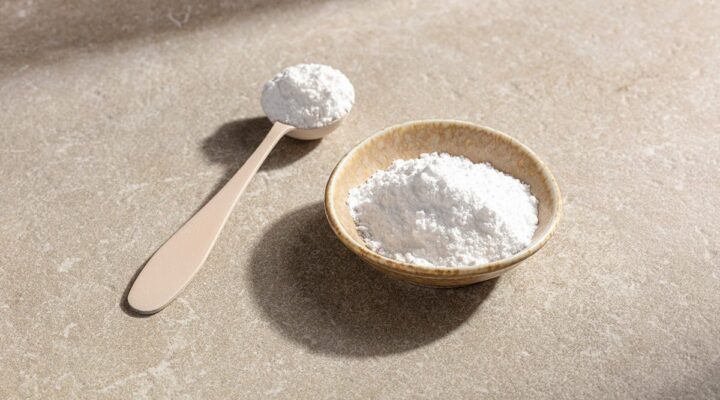
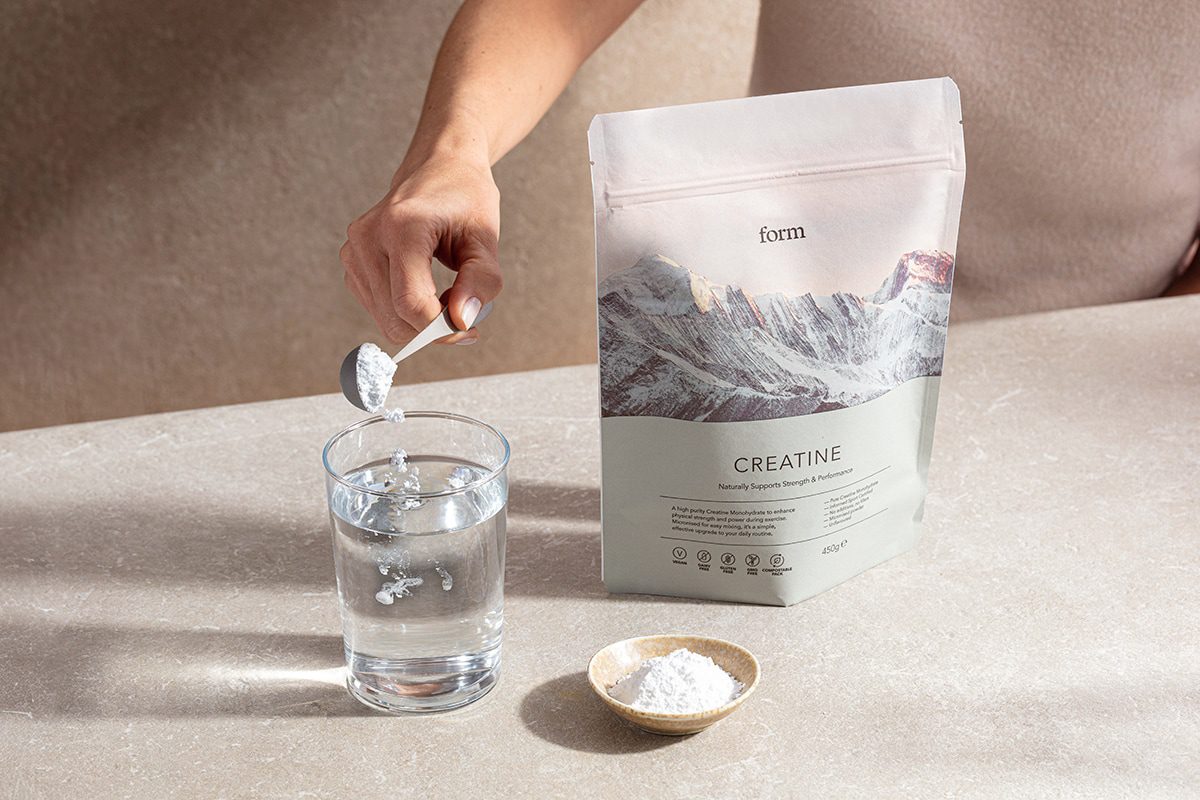
You can find Form Creatine here – highly micronised for smooth, grit-free mixing, Informed Sport Certified, with no fillers, no additives and no plastic packaging.
References
- Kreider RB, et al. (2017). International Society of Sports Nutrition position stand: safety and efficacy of creatine supplementation in exercise, sport, and medicine. Journal of the International Society of Sports Nutrition.
- Gualano B, et al. (2016). Creatine supplementation in the aging population: effects on skeletal muscle, bone and brain. Amino Acids.