
How Redesigning Your Subconscious Mind Can Change Your Limiting Beliefs


From Marie Kondo-ing our closets to learning how to speak like a TED presenter, self-development books have become as much a part of our modern wellness routines as a hot Pilates class or a scoop of creatine in our protein shake. But what if our growing obsession with self-improvement is, ironically, the thing that’s leaving us feeling increasingly unsettled and dissatisfied?
According to writer and thought leader Peter Crone (@petercrone), our voracious hunger to self-optimise through a growing menu of popular self-help methods is leaving us more anxious and preoccupied than ever before. And with so many five-step fixes circulating online, it’s easy to feel permanently on a treadmill where satisfaction feels just out of reach.
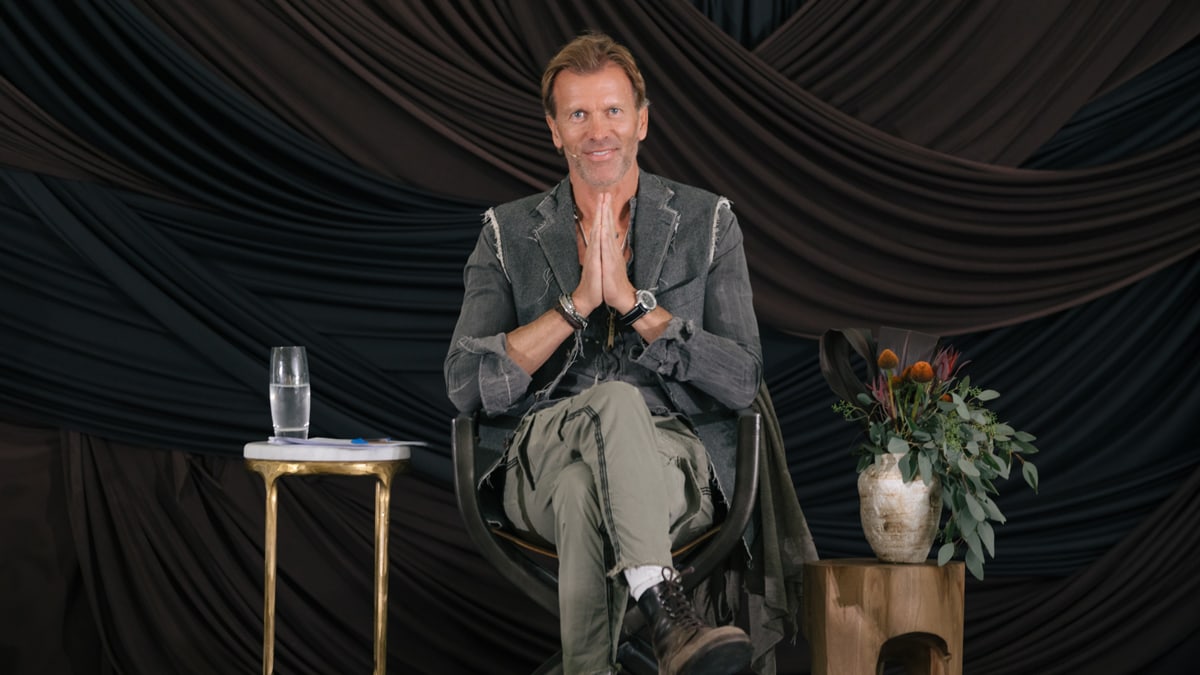
Crone, whose work centres on helping people to redesign their subconscious beliefs, says the real work doesn’t lie in striving to do more, but in recognising that we’re already complete as we are. As the recent speaker at Healf’s HX26 summit puts it: “True happiness is the absence of the search for happiness.”
The tricky thing about the subconscious mind is that it’s just that – the part that operates below our normal awareness. To help us better understand how to control this complex mental processing, we spoke to the performance guru about the power of unlocking our brain’s master key.
So what exactly are limiting beliefs?
“If we break down the words, ‘limiting’ means that there’s some sort of constraint or confinement to the way that you’re architecting your view of life,” Crone explains. “While ‘beliefs’ are the language we use to describe them.”
This type of thinking can lead to what he describes as ‘linguistic fortresses’ – when we use words to create constraint, unbeknownst to ourselves. Common examples include telling yourself you’ll fail a job interview before you’ve even stepped in the room, or believing that you’ll never meet the right partner despite being active on dating apps.
“I often say that being right is the poor man’s version of self-worth,” Crone continues. “If the beliefs you have are based on a limitation, being right can feel good in the moment as it feeds the ego, but ultimately it continues to keep us stuck in familiar patterns.”
Why do they happen?
Over time, your brain tends to cling to these beliefs because they provide a form of protection. “The ego is really looking out for safety, as our primordial imperative as mammals is to survive,” Crone explains. “That’s what creates the fundamental agenda of all human beings’ behaviour.”
When we play small and live within limitations, it gives us the illusion of being safer in our own world. “Plus, insidiously, we tend to enjoy being right about our own view of ourselves too, even if our perspective is based on inadequacy, insecurity or scarcity,” Crone adds.
Common stories we tell ourselves
Having coached hundreds of clients through his private clinic, Crone says that one of the most common limiting beliefs is the feeling that we’re somehow not enough.
“It might come in the guise of ‘I’m not young enough, I’m not old enough, I’m not pretty enough, I’m not thin enough,’ or ‘I’m not rich enough,'” he explains. “Whatever the format, the feeling of inadequacy is something that every human being can relate to.”
If you’re keen to gain a level of awareness around your individual limiting beliefs, Crone says you first have to know exactly what’s holding you back.
“It takes a bit of discernment and awareness, and often some good friends to help you reflect,” he notes, adding that most people show subtle clues in their language. “They’ll say something like, ‘Oh, I knew that was too good to be true,’ as though that’s a truth,” he notes. “But it’s actually them confirming their own barrier to having an extraordinary life, whatever that might be.
“So, slow down and pay attention to the words that come out of your mouth, if you want real awareness of what’s driving your perspective,” Crone advises. “Investigate the validity of your own words.”
Flipping the script
To reframe these limiting ideas, Crone says we first need to put our current beliefs in the interrogation chair. This is where a journal or notepad can be helpful, so you scribble down your thoughts as they happen.
“With each identified limiting belief, ask yourself, ‘is it an absolute truth?’ A simple exercise is to add a question mark to every negative thought you have,” he advises. “For example, the phrase: ‘It’s too good to be true.’ Well, is it too good to be true?”
When it comes to unpicking our most deep-seated thinking, Crone says that it’s these throwaway lines that often do the most damage – the ones we’ve repeated so often we’ve stopped hearing them as opinions at all. “Things like ‘I knew it would never work out for me.’ Or, ‘My dad said I’d never amount to anything,'” Crone remarks.
“Does that mean, ipso facto, that’s precisely how your life is going to manifest?” he questions. “No, unless you actually believe it, in which case you will seek evidence.” This is a common phenomenon called ‘cognitive bias’ in play – a predictable glitch in our thinking that causes us to judge situations, people or facts irrationally.
Given how deeply wired these negative thought patterns can be, it’s tempting to want to overhaul your entire internal monologue overnight. “There’s no quick fix here though,” Crone stresses. “It’s all a dissolution process, changing the inner language so that what once felt undeniably true is open for debate.”