
Should You Be Walking in a Weighted Vest? What the Science Says

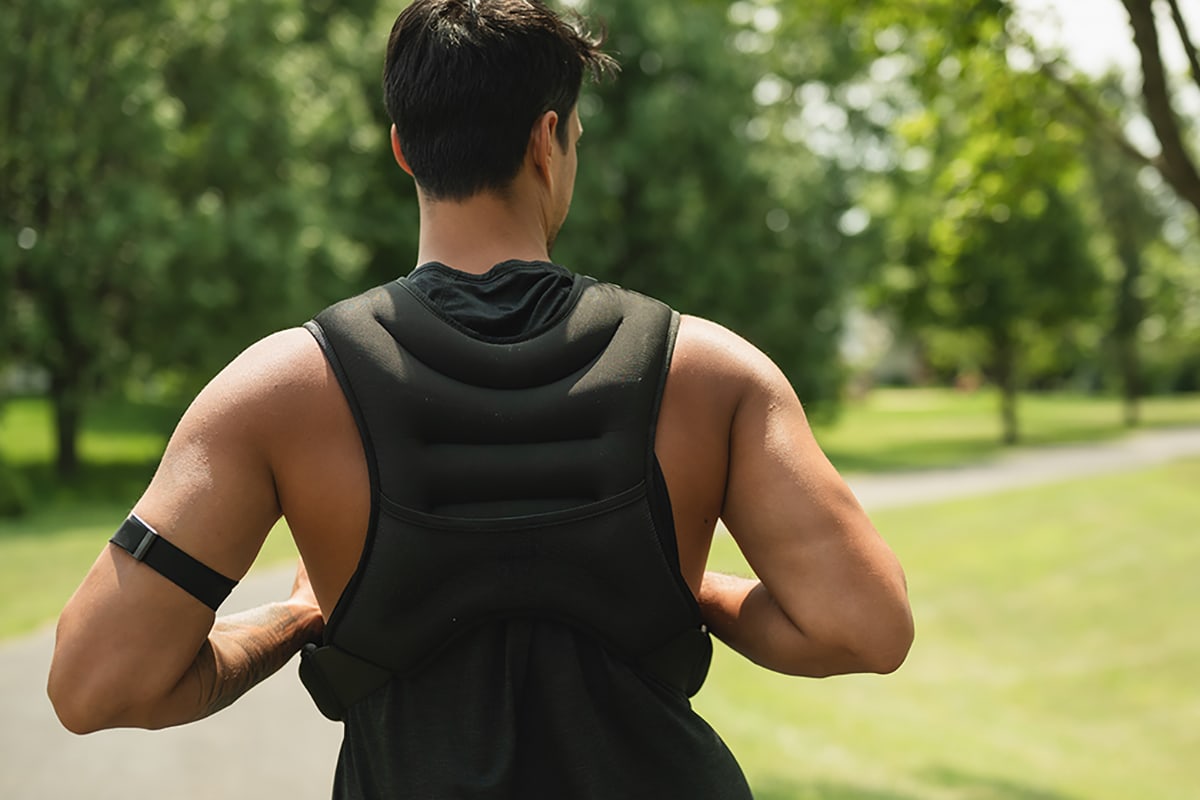
You have seen them. The steady stream of people striding round the park, coffee in hand, strapped into something that looks like body armour. Weighted vest content has racked up tens of millions of views across social feeds, mostly built on a single, appealing promise: take the walk you already do, add load, get more back.
It is a genuinely good pitch. Walking is the most sustainable form of movement most people have, and the idea that you can upgrade it without adding a single minute to your day is hard to argue with. The problem is that the promise has quietly expanded. Somewhere between the first sensible videos and the current wave, “a vest makes your walk harder” became “a vest reverses bone loss”.
Those are not the same claim, and the research treats them very differently. Here is what a weighted vest reliably does, what it probably does not, and how to start without wrecking your lower back in week two.
What does adding a vest actually change?
The immediate effect is metabolic. Carrying extra mass raises the energy cost of every step, which means a higher heart rate and more oxygen consumed at the same pace.
How much extra depends on two things: how heavy the vest is, and how hard you are already working. A treadmill study published in Medicine & Science in Sports & Exercise found that at slower walking speeds, a load of around 10% of body mass was needed before oxygen consumption shifted meaningfully. At faster speeds, 5% was enough to register.
Gradient does a lot of the heavy lifting too. Research commissioned by the American Council on Exercise found untrained women walking at a 5% to 10% incline burned roughly 13% more calories in a 10% body mass vest, with little additional benefit from going heavier. A lighter vest on a hill beats a heavier vest on the flat.
So the honest framing is this: a vest is an intensity dial for a walk you are already doing. It nudges an easy stroll into more useful territory, in much the same way that interval walking or paying attention to heart rate zones does. That is a real benefit. It is also a smaller one than the marketing suggests.
Can a weighted vest really build bone?
This is the claim doing the most work online, and it is where the evidence gets interesting.
The optimistic case has a solid origin. A five year study in The Journals of Gerontology followed postmenopausal women doing weighted vest exercise combined with jumping, three times a week, and found hip bone density was preserved compared with controls. That finding is often cited as proof that vests build bone. Note the detail that gets dropped: the intervention included jumping.
Then came the most rigorous test yet. The INVEST in Bone Health trial, published in JAMA Network Open, randomised 150 older adults to weight loss alone, weight loss plus daily weighted vest use, or weight loss plus supervised resistance training. The vest group wore theirs around eight hours a day for a year. Neither the vest nor the resistance training prevented bone loss at the hip.
A follow-up analysis in Frontiers in Aging added a crucial nuance. Within the vest group, the people who spent more time standing and stepping did see positive changes in bone density. Those who wore it while largely sitting did not. As lead author Jason Fanning put it, a vest is a useful tool, but “like any tool, it’s not going to do the work for you”.
Bone responds to load that is high in magnitude and applied quickly. That is why the LIFTMOR trial produced clear bone density gains in postmenopausal women using heavy resistance training and impact work, and why a meta-analysis of walking studies found walking alone does little for bone density at most sites. Adding 5kg to a stroll does not clear that bar. Treat a vest as a supporting act for bone health, not the headline.
How much weight should you start with?
The single most common mistake is buying the vest that a very fit stranger is wearing in a video.
Start here: somewhere around 5% of body weight. For someone of 70kg, that is roughly 3.5kg. It should feel noticeable within the first ten minutes and unremarkable by the end of the walk. Most of the research showing a meaningful metabolic effect sits between 5% and 10% of body weight, and 10% is best understood as a ceiling to work towards over months, not a starting point.
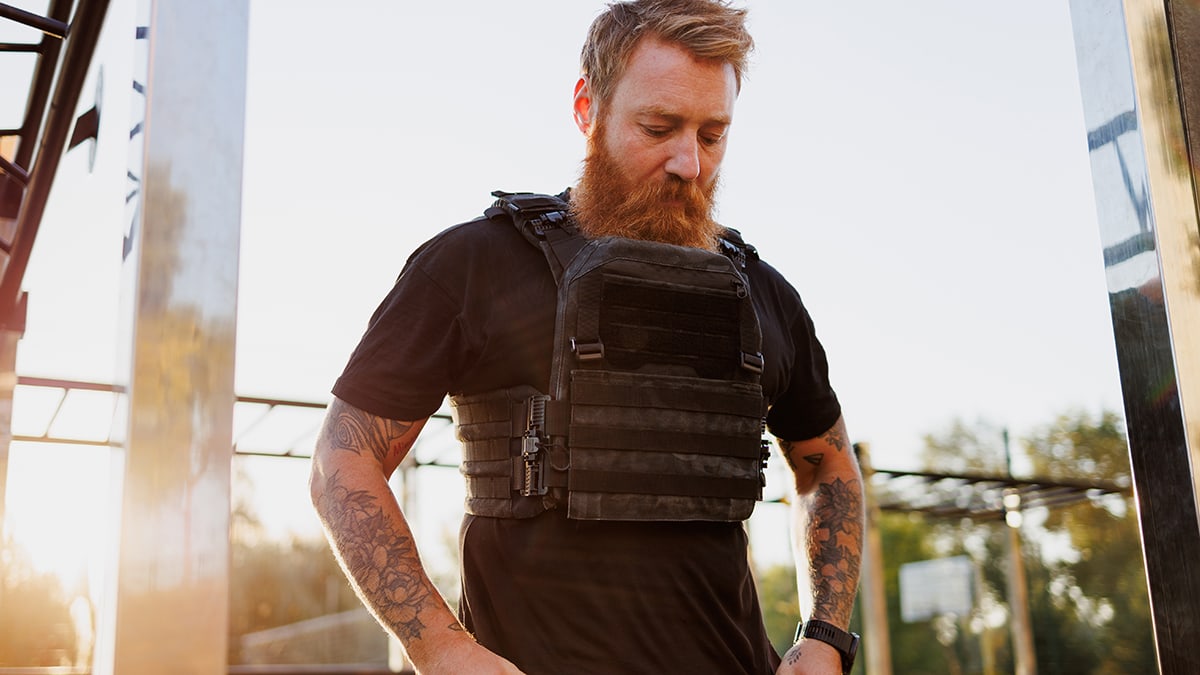
How to fit it: the vest should sit snug against the torso with the load high and close to the centre of mass. If it swings, bounces, or slides down towards the hips, the weight is too low or the straps are too loose, and your spine will absorb the difference. Adjustable vests with small increments are worth the extra money, because they let you progress in sensible steps rather than 2kg jumps.
When does a vest help, and when is it just extra strain?
It helps when walking is already a reliable habit, your usual route has started to feel like nothing, and you want more stimulus without more time. It also helps if you want to make a recovery walk slightly more productive without pushing into a session that needs recovering from, which is the whole logic behind zone zero training.
It is the wrong tool if you are currently dealing with lower back, hip, knee, or ankle pain, if you are pregnant or recently postnatal without clearance from a clinician, or if you have a diagnosed bone condition and have not spoken to someone qualified about loading. Adding compression to an already irritated structure does not build resilience.
Watch for the warning signs while you walk. Writing in The Conversation, INVEST lead investigator Kristen Beavers flags hunching, a shortened or clipped stride, and any lower back pain as reasons to take the vest off. A vest should never change how you walk. If your gait shifts, the load is too heavy.
A note for perimenopause
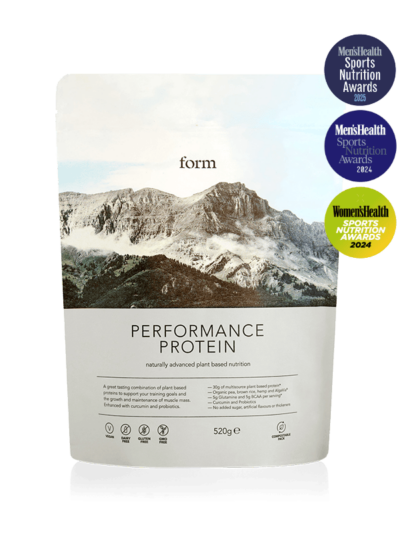
Bone loss accelerates in the years around menopause as oestrogen declines, which is exactly why weighted vests are marketed so hard to women in this stage of life. Vest walking is a reasonable addition to a routine, and there is no reason to avoid it. Just be clear that the strongest evidence for protecting bone during this window points towards heavy resistance training and impact work, not loaded walking. Supporting lean muscle with adequate protein matters here too, which is where something like Form’s Performance Protein earns its place alongside the training rather than instead of it.
How to progress without overdoing it
Progress in this order: duration, then terrain, then load. Extend the walk first, add hills second, and only add weight once both feel comfortable.
Start with two or three vested walks a week of around 20 to 30 minutes, keeping your other walks unloaded. Hold each weight for at least two to three weeks before adding more, and increase in the smallest increment your vest allows. Take it off when the walk ends. Wearing a vest around the house all day is a research protocol for a specific clinical population, not a lifestyle recommendation.
The bottom line
A weighted vest is a legitimate, low-cost way to make a walk you already enjoy more demanding. It raises the energy cost, it nudges your heart rate somewhere more useful, and it asks a little more of your legs and trunk. Those are decent returns for a piece of kit you can put on in ten seconds.
What it is not is a shortcut to stronger bones. The best available trial found that wearing one for eight hours a day did not stop bone loss, and the follow-up made the point plainly: the benefit tracks with how much you move in it. The vest is not the intervention. The movement is.
Start light, keep your stride honest, and let the walk stay something you look forward to.
References
- Puthoff ML et al. The effect of weighted vest walking on metabolic responses and ground reaction forces. Medicine & Science in Sports & Exercise. 2006.
- American Council on Exercise. The metabolic cost of slow graded treadmill walking with a weighted vest.
- Snow CM et al. Long-term exercise using weighted vests prevents hip bone loss in postmenopausal women. The Journals of Gerontology: Series A. 2000.
- Beavers KM et al. Weighted vest use or resistance exercise to offset weight loss-associated bone loss in older adults: a randomized clinical trial. JAMA Network Open 2025.
- Fanning J et al. Does time spent upright moderate the influence of a weighted vest on change in bone mineral density during weight loss among older adults. Frontiers in Aging 2026
- Watson SL et al. High-intensity resistance and impact training improves bone mineral density and physical function in postmenopausal women with osteopenia and osteoporosis: the LIFTMOR randomized controlled trial. Journal of Bone and Mineral Research. 2018.
- Martyn-St James M, Carroll S. Meta-analysis of walking for preservation of bone mineral density in postmenopausal women. Bone 2008.
- Beavers KM. Wearing a weighted vest can promote bone health and weight loss, but it’s not a cure-all. The Conversation.