
Zone Zero Training: The Case for Doing a Whole Lot Less

Fitness culture has spent the better part of three decades telling us to push harder. More intensity. More sweat. More discomfort. If your workout doesn’t feel difficult, the thinking went, it probably isn’t working. That framing suited a certain kind of person in a certain kind of season. But something is shifting. The trend that fitness researchers and gyms are calling zone zero is, essentially, the opposite of all that. And it has a surprisingly robust scientific case behind it.
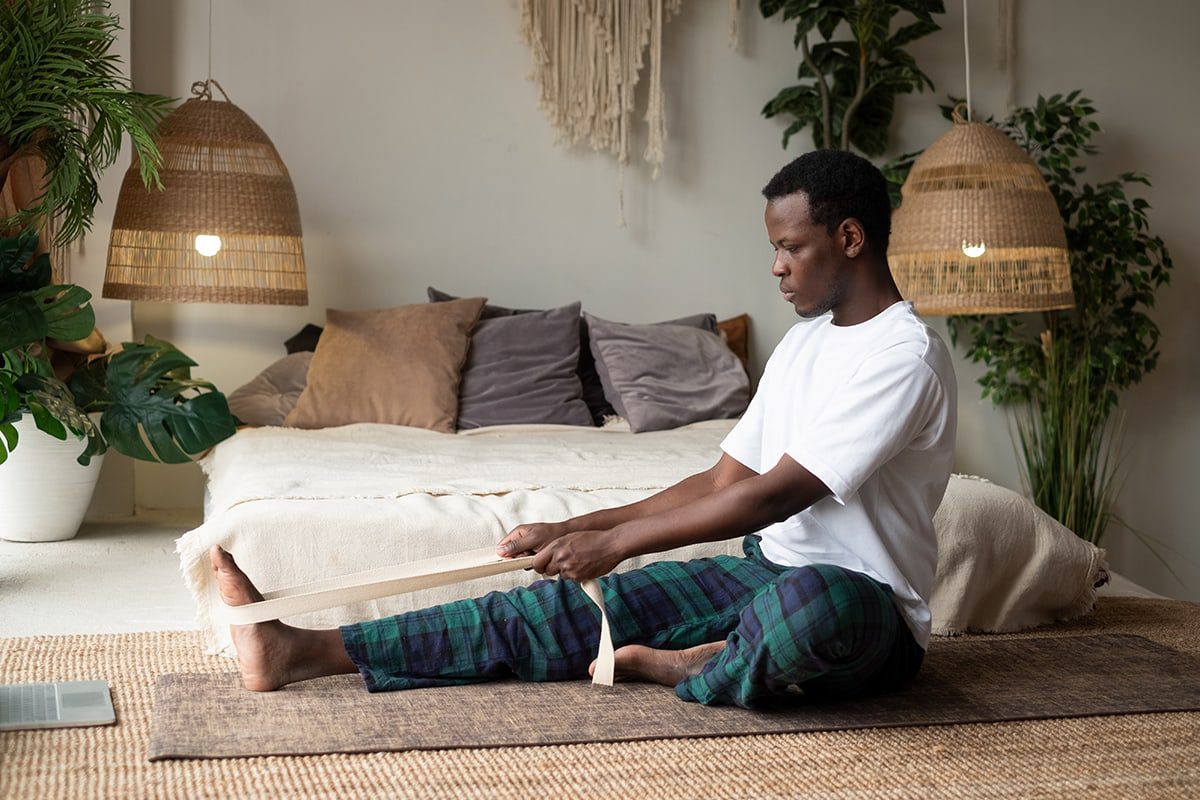
Zone zero sits below even the gentle end of the traditional heart rate zone model. It refers to movement at below 50% of your maximum heart rate: slow walking, easy stretching, yin yoga, light household activity, a stroll slow enough that you could hold a full conversation without any effort at all. Les Mills, whose annual research shapes a significant portion of what appears in gyms globally, named it one of their defining fitness trends of recent years. The question worth asking is whether the science supports the hype, or whether this is simply the wellness industry giving people permission to do less and calling it a strategy.
The answer, as it turns out, is more interesting than either of those framings.
Where does zone zero sit in the heart rate model?
To understand zone zero, it helps to know where it sits relative to the zones that came before it. The traditional five-zone model maps exercise intensity against heart rate as a percentage of your maximum, with zone one covering 50 to 60% and zone five reaching maximal effort. Zone two, covering roughly 60 to 70% of maximum heart rate, has had considerable attention in recent years for its role in building aerobic base and fat oxidation.
Zone zero sits below all of that. It describes activity that keeps your heart rate below half its maximum. To get a rough sense of your own zone zero ceiling: subtract your age from 220 to estimate your maximum heart rate, then halve it. For a 35-year-old, that’s somewhere around 92 beats per minute. At that intensity, nothing is strained, nothing is strenuous, and the effort required is so minimal it barely registers as exercise in the traditional sense.
This is intentional. The defining characteristic of zone zero isn’t just physiological: it’s psychological. It’s movement that removes every barrier that makes exercise feel like a burden.
Is very light movement actually good for you?
This is where the evidence gets genuinely compelling. Research has consistently found that light physical activity, even at intensities well below conventional exercise guidelines, delivers measurable health benefits. The biggest gains tend to go to those who move the least to begin with.
A large-scale Swedish study, led by Dr Elin Ekblom-Bak of the Swedish School of Sport and Health Sciences and drawing on data from over 316,000 adults, found that for every millilitre increase in VO2 max (a marker of cardiorespiratory fitness), the risk of all-cause mortality fell by 2.8% and the risk of a cardiovascular event fell by 3.2% (1). Crucially, the benefits were significant regardless of starting fitness level, which led Dr Ekblom-Bak to note that for most people, simply being more active in daily life, taking the stairs, cycling to work, walking an extra stop, is enough to meaningfully improve health outcomes.
A separate large cohort study found that older adults engaging in light-intensity physical activity alone, without any moderate or vigorous exercise, showed a 26% lower risk of all-cause mortality compared to completely sedentary individuals (2). The implication is significant: movement doesn’t need to be intense to be meaningful, particularly for those coming from a low baseline.
This connects closely to the concept of NEAT (non-exercise activity thermogenesis): the energy expended through all the movement in your day that isn’t formal exercise. Research published in the Journal of Exercise Nutrition and Biochemistry found that NEAT represents the most variable component of daily energy expenditure and plays a meaningful role in metabolic health outcomes, with even low-level daily movement associated with reductions in cardiovascular risk factors (3).
What does zone zero do that higher-intensity training doesn’t?
One of the more compelling arguments for zone zero isn’t just what it does independently: it’s what it does in combination with harder training.
High-intensity exercise triggers the sympathetic nervous system, the body’s physiological accelerator. Done regularly and appropriately, this is exactly what drives fitness adaptation. Done too frequently, or without adequate recovery, it keeps cortisol elevated and the nervous system in a chronically activated state. Research has found that yoga, gentle movement, and breathwork engage the parasympathetic nervous system, actively shifting the body toward what’s sometimes called rest-and-digest mode, and that this has measurable effects on cortisol regulation and recovery (4).
The practical relevance for regular exercisers is real. Active recovery, gentle movement on days between harder sessions, has been shown to support recovery more effectively than complete rest by maintaining circulation and gently flushing metabolic byproducts from muscle tissue, without adding additional stress load. Zone zero, in this framing, isn’t a replacement for higher-intensity training: it’s the counterbalance that makes sustained harder training possible.
There’s also an underappreciated mental health dimension. Light movement has been associated with improved mood, reduced anxiety, and better cognitive function, partly through the same parasympathetic mechanisms that support physical recovery. The psychological benefit of movement that feels restorative rather than punishing shouldn’t be dismissed as soft science: for many people, it’s the difference between a sustainable relationship with exercise and one that cycles through motivation and burnout.
What is zone zero not good for?
Here’s where intellectual honesty matters. Zone zero is not a training strategy in the traditional sense. It won’t meaningfully build cardiovascular fitness, muscular strength, or VO2 max in someone who is already moderately active. The adaptations that come from progressive overload, from pushing the body incrementally harder, require exactly the kind of stress that zone zero deliberately avoids.
If your goal is to run faster, build muscle, improve athletic performance, or significantly raise your aerobic capacity, zone zero should sit alongside more demanding training, not replace it. The research that demonstrates its mortality and metabolic benefits is largely drawn from populations who were previously sedentary or low-activity. For someone already training consistently, adding more zone zero won’t produce the same dramatic returns.
The distinction that matters is between zone zero as a foundation and zone zero as a ceiling. As a foundation, particularly for people who find higher-intensity exercise intimidating or who are returning from injury, illness, or a long break, it has a strong evidence base. As a permanent upper limit, it leaves most of the adaptations that make exercise transformative on the table.

So who is zone zero actually for?
Almost everyone, in some form. But for different reasons.
For people who are currently inactive, zone zero is perhaps the most important shift in framing that fitness culture has produced in years. The idea that you need to be gasping to be making progress has put an enormous number of people off exercise entirely. Research supports the view that even the gentlest consistent movement produces real health returns, and that reducing sedentary time is one of the highest-leverage things an inactive person can do for their long-term health. If you’re looking for ways to build more movement into a busy day, exercise snacking is another approach worth exploring alongside zone zero.
For people who already train regularly, zone zero works differently. It’s the active recovery session, the evening walk, the yin class after a heavy week. It’s the part of a well-structured training week that allows the harder sessions to be absorbed properly, and that keeps the nervous system from spending too long in a state of accumulated stress.
And for anyone navigating periods of illness, stress, injury, or simply a life that doesn’t allow much else, zone zero is a reminder that something is always better than nothing. Not as a consolation prize. As a legitimate physiological truth.