
What Is VO2 Max, And Can You Actually Improve Yours?

A few years ago, VO2 max was a number that lived in sports science labs and the training logs of competitive endurance athletes. Then it appeared on Apple Watch. Then it started cropping up in longevity content and the kind of wellness conversations that used to be dominated by steps and resting heart rate. Now it sits alongside sleep scores and HRV as one of the metrics that health-conscious people actually track.
The mainstreaming of VO2 max is, for once, a piece of wellness culture that the science broadly supports. It is not a trend built on weak evidence or influencer momentum. The research on what VO2 max predicts, and what improving it means for long-term health, is among the most compelling in exercise science. The question worth asking is not whether it matters, but whether you understand what it is, and whether you are training in a way that actually moves it.
What does VO2 max actually measure?
VO2 max is the maximum amount of oxygen your body can consume and utilise during intense exercise, expressed in millilitres of oxygen per minute per kilogram of bodyweight. The higher the number, the more oxygen your cardiovascular and muscular systems can process at peak effort.
It is, in effect, a measure of the combined efficiency of your entire oxygen delivery chain: how much air your lungs can process, how effectively your heart pumps oxygenated blood, how well your circulatory system delivers it to working muscles, and how efficiently those muscles extract and use it. A weakness anywhere in that chain will be reflected in the number.
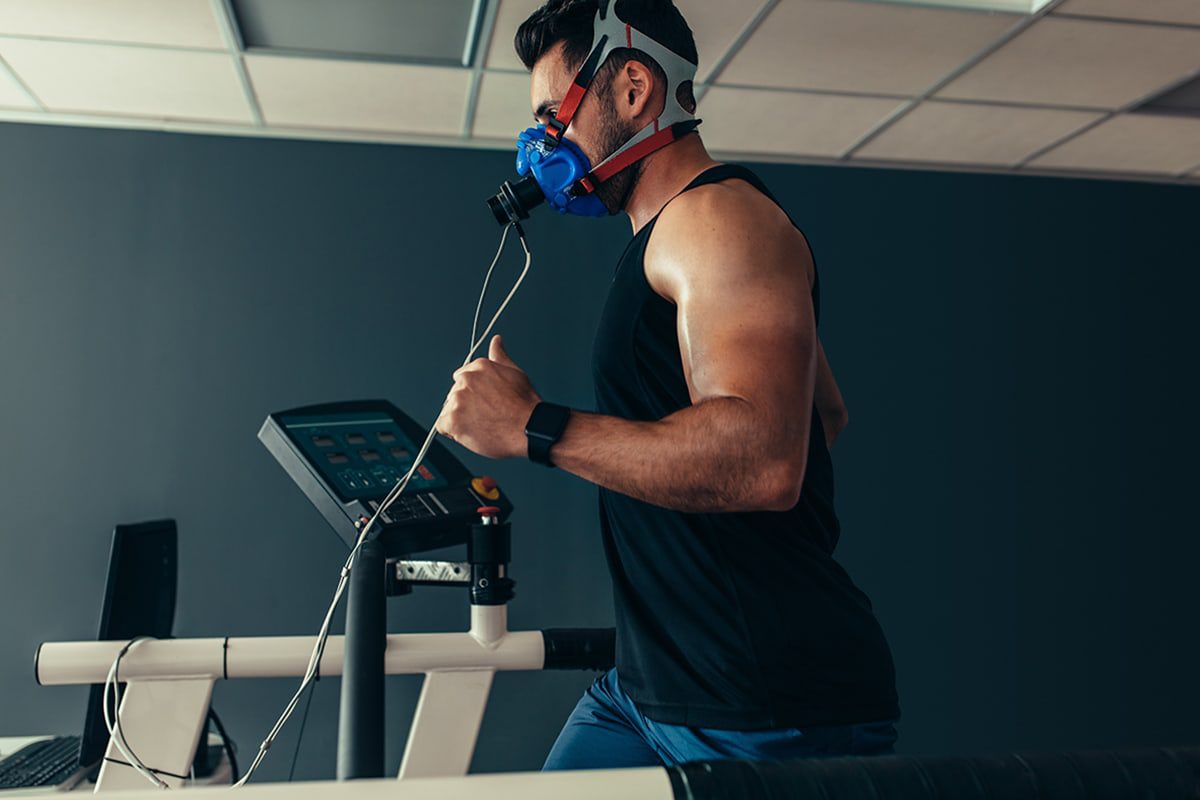
The gold standard test involves exercising to exhaustion on a treadmill or bike while wearing a mask that measures oxygen consumption and carbon dioxide output directly. The smartwatch estimate you receive after a run is an approximation using heart rate data and an algorithm, not a direct measurement. It is useful as a trend indicator but should not be treated as clinical precision.
VO2 max is typically expressed in categories. For a reasonably active adult in their thirties, a score above 45 ml/kg/min for men or above 38 ml/kg/min for women is considered good. Elite endurance athletes routinely exceed 60-70 ml/kg/min. The number declines with age, typically at around 10% per decade after 30, unless actively managed through training.
Why does it matter for long-term health?
This is where the conversation moves beyond performance and into something more broadly relevant. A landmark 2018 study published in JAMA found that individuals with the lowest VO2 max values had a fourfold increased risk of mortality compared to those with the highest values. A separate analysis in the Journal of the American College of Cardiology found that each 1 ml/kg/min increase in VO2 max was associated with roughly 45 additional days of life expectancy.
The American Heart Association has formally recommended incorporating VO2 max into routine clinical evaluations, citing its predictive value across cardiovascular disease, metabolic health, and all-cause mortality. Research published in Frontiers in Bioscience describes it as the strongest single predictor of life expectancy currently available.
The mechanism is not mysterious. Higher cardiorespiratory fitness means the heart, lungs, and vascular system are functioning efficiently. That efficiency reduces strain on the cardiovascular system, improves insulin sensitivity, supports better metabolic health, and maintains the physical capacity that underpins functional independence as we age. VO2 max is, in this sense, a summary score for a great deal of what we care about when we talk about longevity-oriented living.
Can you actually improve it?
Yes, and more meaningfully than most people assume. VO2 max has a genetic ceiling, and some people are simply born with a higher capacity than others. But the trainable range is significant: research consistently shows that targeted training can raise VO2 max at any age, and that even modest improvements carry substantial health benefits. Moving from the bottom quartile to the second quartile of VO2 max fitness is associated with around a 50% reduction in all-cause mortality risk.
The two most evidence-supported training methods are zone 2 cardio and high-intensity interval training (HIIT), and they work through different but complementary mechanisms.
Zone 2: building the foundation
Zone 2 training refers to sustained, low-intensity aerobic exercise at roughly 60-70% of your maximum heart rate: a pace where you can hold a conversation but would not describe yourself as comfortable. At this intensity, the body relies predominantly on fat oxidation for fuel, and the primary adaptation is mitochondrial biogenesis: the creation of new mitochondria in muscle cells.
More mitochondria means more cellular machinery for processing oxygen, which is the upstream driver of VO2 max improvement. Zone 2 also improves capillary density, cardiac stroke volume, and the efficiency of fat metabolism, building an aerobic base that makes higher-intensity training more effective and sustainable.
The practical prescription is consistency over volume. Three to four hours of zone 2 work per week, spread across multiple sessions, produces meaningful adaptation over eight to twelve weeks. The mistake most people make is drifting above zone 2 without realising it, which reduces the specific stimulus. If you cannot hold a conversation, you are working too hard.
HIIT: raising the ceiling
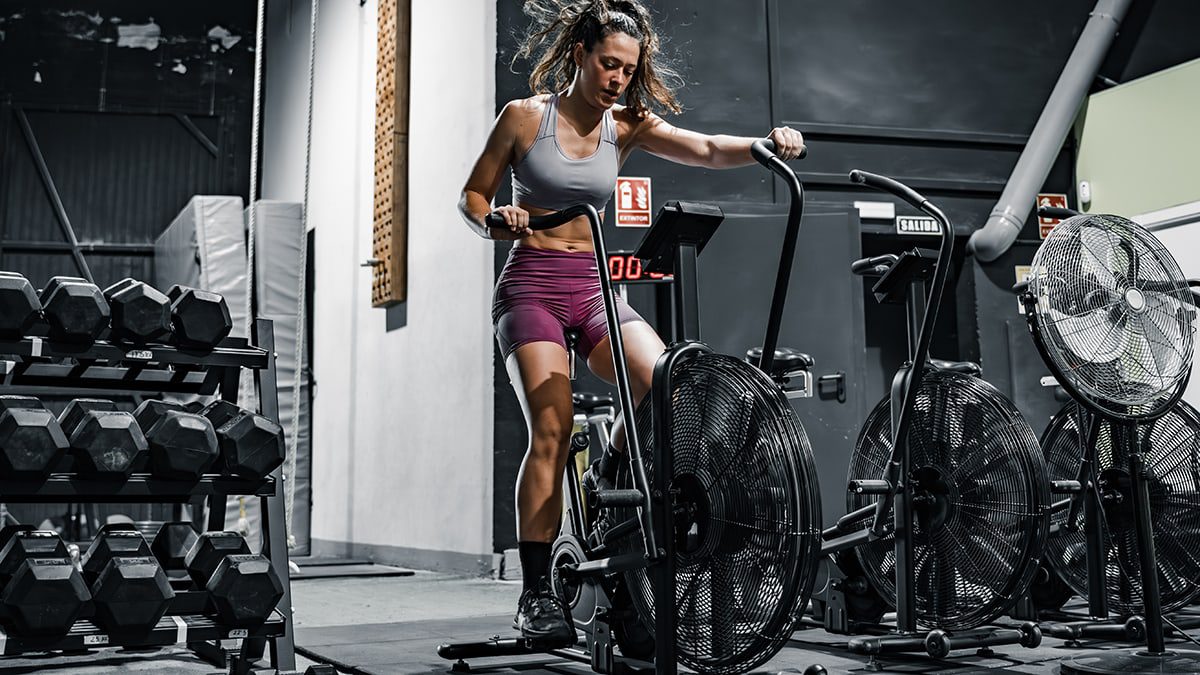
Where zone 2 builds the aerobic foundation, high-intensity interval training raises the VO2 max ceiling by forcing the cardiovascular system to operate at 90-100% of maximal capacity. A 2026 scoping review of 617 exercise training studies confirmed that high-intensity intervals produce the largest VO2 max improvement relative to training time invested.
The mechanism is direct: to improve your maximum oxygen uptake, you need to regularly train at or near it. Efforts of three to five minutes at very high intensity, with equal or longer recovery periods between them, are the most commonly studied protocol. One to two HIIT sessions per week is the evidence-supported range for most people; more than three sessions per week risks accumulated fatigue and diminishing returns.
The two methods are not in competition. The most effective approach for most people combines a base of consistent zone 2 work with one to two harder sessions per week, a model used by elite endurance athletes and increasingly recommended in longevity-focused training programmes. Building zone 2 capacity first makes the HIIT sessions more productive; the HIIT sessions push the ceiling that zone 2 then consolidates.
What else supports VO2 max improvement?
Training is the primary driver, but several supporting factors matter. Sleep is directly relevant: the cardiovascular and mitochondrial adaptations from training are consolidated during deep sleep, and chronic sleep deprivation measurably blunts adaptation. Nutrition plays a role too, particularly adequate carbohydrate availability to fuel higher-intensity sessions and sufficient protein to support the muscular adaptations that accompany aerobic training.
Strength training, often absent from endurance-focused plans, improves muscular efficiency and has been shown to support VO2 max gains, particularly in people new to structured training.
The final and perhaps most important variable is simply consistency over time. VO2 max responds to sustained training stress across months, not days. It is not a metric that rewards occasional hard efforts; it rewards the kind of regular, structured aerobic work that most people find less exciting to post about but considerably more effective to do.
Which, as a framework for health, turns out to apply fairly broadly.