
How Much Creatine Do You Need?

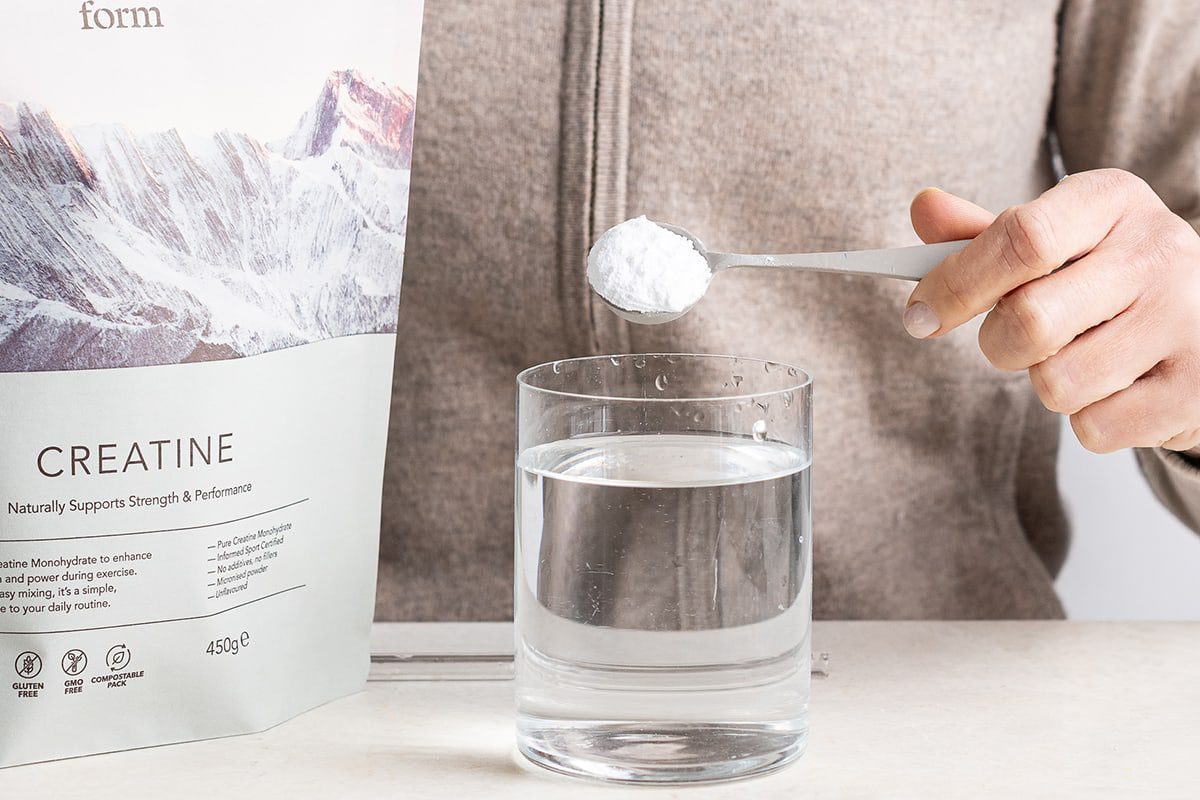
If you’ve spent any time in the supplement aisle, on Reddit, or within earshot of a gym conversation in the last decade, you’ll have heard the number: five grams. Five grams of creatine monohydrate per day, every day. It’s become one of the few genuinely uncontested recommendations in sports nutrition, repeated so often it feels less like a guideline and more like a law of nature.
And for good reason. The science behind 5g as a daily maintenance dose is robust, replicated across decades of research, and endorsed by the International Society of Sports Nutrition as the effective standard. For the vast majority of people, it works. But as creatine’s reputation expands well beyond the weight room (for a full breakdown of what those benefits look like in practice, this piece covers the evidence across muscle, brain and recovery), researchers are beginning to ask whether certain populations might benefit from building on that foundation. Here’s what the science says.
Where did the 5g recommendation come from?
The modern era of creatine supplementation traces back to a 1992 paper by Roger Harris, Karin Söderlund and Eric Hultman, which demonstrated that oral creatine monohydrate significantly increased total creatine content in human skeletal muscle (1). Their protocol established the now-familiar loading phase of around 20g per day for five to six days, followed by a maintenance dose of 3-5g daily (2). That lower dose proved sufficient to keep muscle stores topped up, and the recommendation stuck.
The research focused on skeletal muscle in young, predominantly male athletes, and it’s held up exceptionally well for that purpose. Where the picture becomes more interesting is when you consider brain health, cognitive resilience, and the needs of people with different body weights or dietary patterns. The 5g figure was never designed to be a one-size-fits-all answer for every goal. For a deeper primer on the mechanisms behind all of this, our full explainer on what creatine actually does in your body covers the phosphocreatine system in detail.
Does your brain respond differently to creatine?
Unlike skeletal muscle, the brain doesn’t absorb creatine easily from the bloodstream. The blood-brain barrier significantly limits how much exogenous creatine can cross into neural tissue, which means the dosing dynamics that work for muscle may play out differently for cognitive effects (3).
A 2024 systematic review in Frontiers in Nutrition, covering 16 randomised controlled trials, found that creatine supplementation showed a statistically significant positive effect on overall cognitive function, with particular promise for memory (4). The doses associated with the most consistent cognitive benefits tended to sit above the standard 5g protocol. A 2025 study from Texas A&M University recommended 10g per day for cognitive benefit specifically, noting that creatine does not cross the blood-brain barrier readily at lower doses (5).
The evidence isn’t fully settled. In November 2024, the European Food Safety Authority (EFSA) concluded that the overall evidence was insufficient to approve an official health claim linking creatine to improved cognition (6). That doesn’t mean the benefits aren’t real; it means the regulatory bar is high and the research is still maturing. For muscle performance, 5g is the established answer. For brain health, the science points toward higher doses for those who specifically want cognitive effects.
Does body weight change the equation?
A 55kg runner and a 110kg rugby player being given the same dose makes about as much intuitive sense as prescribing the same shoe size for both.
Dr Darren Candow, Professor and Director of the Aging Muscle and Bone Health Laboratory at the University of Regina and one of the world’s leading creatine researchers, has outlined a weight-adjusted approach as a practical middle ground: roughly 0.1g per kilogram of bodyweight per day, which works out at approximately 7-10g daily for most adults (7). The logic is straightforward: larger bodies have more tissue to saturate, and a flat recommendation was never designed with significant variation in body mass in mind. The ISSN has acknowledged this variability too, noting that the 3-5g range is effective for most people while leaving room for individual adjustment based on body mass and goals (8).
For the majority of people, 5g remains exactly right. For those significantly above average body weight, or with specific performance goals, there is a reasonable case for scaling up.
What about people on plant-based diets?
Creatine is found naturally in meat and fish, which means vegetarians and vegans rely entirely on endogenous synthesis. Research consistently shows that vegetarians have lower baseline creatine stores in muscle and blood, though brain creatine levels appear more stable across dietary groups, likely because the brain relies primarily on its own local production (9).
A 2020 systematic review found that creatine supplementation in vegetarians increased muscle creatine concentrations, lean tissue mass, muscular strength and measures of brain function including memory (9). An earlier study of 128 young women found that vegetarians who supplemented with creatine showed significantly better memory performance compared to both vegetarians on placebo and meat-eaters (10).
For anyone eating predominantly plant-based, creatine supplementation is arguably even more relevant than it is for omnivores. Creatine monohydrate is synthesised from sarcosine and cyanamide rather than animal products, making it suitable for vegans, though capsule forms may contain gelatin, so a quality powder is the safest bet. Women in particular may have specific considerations worth understanding; this piece looks at the evidence for female physiology in detail.
Can creatine help when you’ve slept badly?
A 2024 study in Scientific Reports found that a single high dose of creatine (0.35g per kg of body weight) improved cognitive performance and induced measurable changes in cerebral energy during sleep deprivation (11). The mechanism makes sense: sleep deprivation drains the brain’s phosphocreatine reserves, reducing its capacity to regenerate ATP. Supplemental creatine can help replenish those reserves, maintaining mental clarity even when sleep has been compromised.
This doesn’t mean taking large doses every time you have a rough night. The high single-dose protocol was designed for a controlled research setting. Under normal sleep conditions, creatine does not appear to significantly alter sleep quality or duration (12). This is about cognitive resilience when you’re running on empty, not a replacement for actual rest.
So how much should you actually take?
For most people, 5g of creatine monohydrate per day is exactly right. The ISSN has confirmed it as the effective maintenance dose, it’s sufficient to saturate muscle stores within three to four weeks, and it’s the dose backed by the deepest body of evidence (8). If you’ve encountered claims that creatine causes hair loss, kidney damage or bloating, we’ve addressed the most common myths in detail here.
Where the picture becomes more nuanced is for specific populations. Those interested primarily in cognitive benefits, larger individuals, or people following a plant-based diet may find that emerging research points toward 8-10g per day as a more targeted approach (5). This isn’t a criticism of the standard dose; it’s a reflection of the fact that different goals and different bodies may have different requirements.
Timing is largely irrelevant. Creatine works by gradually building intracellular stores over weeks, so consistency matters far more than when you take it. Loading phases are optional; they accelerate saturation but aren’t necessary if you’re happy to let stores build over three to four weeks (2). If higher doses cause any gastrointestinal discomfort, splitting them across two or three servings throughout the day tends to help, as does choosing a well-formulated, micronised monohydrate.
The bottom line
Creatine is, by a considerable margin, the most researched sports supplement in existence. Its safety profile is robust, its muscle-building credentials are beyond dispute, and its emerging cognitive benefits are genuinely exciting. Five grams a day is a well-earned recommendation, not an arbitrary default, and for most people it’s all they’ll ever need.
For those with specific goals around cognition, larger body mass, or a plant-based diet, the science suggests there’s room to consider whether a higher dose might better serve those aims. Either way, the foundation is the same: consistent daily supplementation with a pure, well-formulated creatine monohydrate.
References
7.Candow DG. Weight-adjusted creatine dosing. Referenced via The Ready State, 2025.