
We Know Creatine Builds Muscle – But What Could It Do for Your Brain?

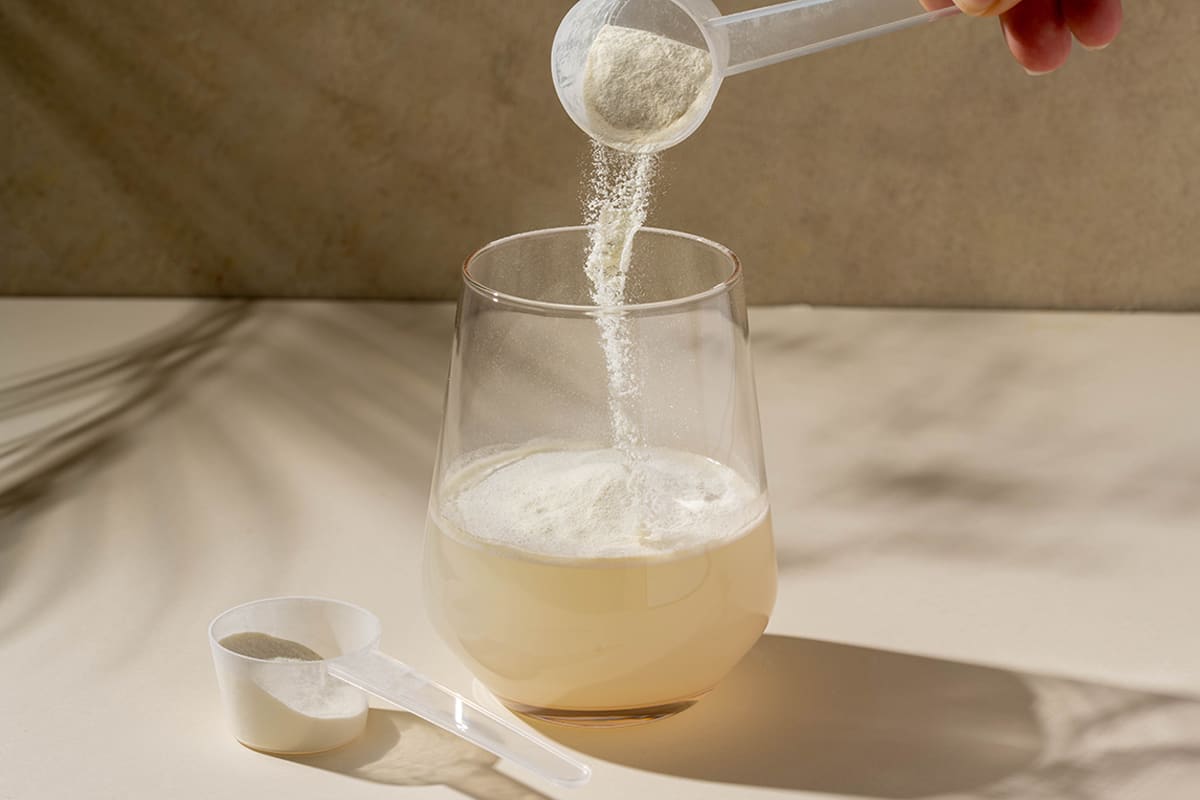
You’ve probably heard of creatine as the supplement for building muscle and powering explosive workouts. But lately, creatine has been stepping out of the weights room and into a very different conversation altogether.
Emerging research is beginning to suggest that this humble compound may do far more than just support physical strength at the gym, with intriguing implications for energy, ageing and even how our brains function.
So should we all be taking creatine to bolster our grey matter and potentially ward off cognitive decline? As ever, we turned to Form’s resident nutrition expert, Dr Adam, to weigh up the evidence.
Why the brain needs creatine in the first place
To understand the potential benefits of creatine supplementation, we must first revisit the role creatine plays in the body.
Creatine – more specifically phosphocreatine (PCr) – provides an ultra-rapid means of recycling ATP, the energy currency of the cell. By donating a phosphate in a single-step reaction catalysed by creatine kinase, one molecule of PCr can regenerate one molecule of ATP. This system can produce ATP around ten times faster than traditional glucose oxidation, but it is short-lived. After just a few seconds, creatine phosphate stores are depleted, meaning it is only effective for brief bursts of rapid energy demand.
The brain is one of the most energy-hungry organs in the body, consuming around 20–25% of our total metabolic rate. It is also the body’s priority glucose consumer – a key reason blood glucose is so tightly regulated to ensure a constant supply.
While glucose oxidation remains the brain’s primary energy pathway, it is now well established that the brain also relies on phosphocreatine. Not only does PCr support rapid ATP production, it also plays a role in regulating mitochondrial function and acting as a temporal energy buffer. High concentrations of PCr are found in the brain’s grey matter, particularly within the cerebral cortex and cerebrum, helping to keep the working brain energised.
What creatine actually does for brain function
Given both its role and its location in the brain, creatine has been linked to higher-level functions associated with the cerebral cortex, such as thought, memory, and language, as well as cognitive processes governed by the cerebellum, including the execution of complex, skilled tasks.
From a health perspective, PCr has also been proposed to play a neuroprotective role, although much of this evidence currently comes from animal research. These studies suggest creatine may reduce neurotoxicity and amyloid toxicity – the latter being associated with the accumulation of beta-amyloid plaques that disrupt communication between neurons, a hallmark of Alzheimer’s disease.
Taken together, the mechanistic importance of creatine to brain health is compelling. But what does this mean in practical terms – and can supplementation actually make a difference?
Why boosting brain creatine isn’t as simple as muscle
A substantial body of research supports the benefits of increasing available PCr through supplementation, particularly given the finite nature of this energy system. However, the vast majority of this work focuses on skeletal muscle, where creatine is strongly associated with improvements in muscle performance, function, and mass – especially when combined with resistance training and adequate protein intake.
Whether the same applies to the brain is less clear.
Skeletal muscle contains the highest concentration of PCr in the body (approximately 20–30 mmol/kg of tissue, or around 120 mmol/kg of dry muscle). By contrast, PCr concentrations in the brain are much lower, at roughly 5–10 mmol/kg.
The capacity to increase these levels through supplementation also differs. Muscle PCr can rise by 20–30% following supplementation, whereas increases in brain PCr appear to be far more modest. Even high doses of creatine (around 20g per day) may only raise brain PCr by an average of 9%, and this effect is most commonly observed in older individuals who may already have lower baseline levels.
Unlike muscle, brain PCr appears to be tightly compartmentalised and largely dependent on creatine synthesis within the brain itself, rather than uptake from circulation. This has led to interest in guanidinoacetic acid (GAA), a natural derivative of the amino acid glycine and a direct precursor to creatine. GAA may be more effective at increasing brain PCr, although continuous supplementation raises concerns around potential side effects and possible neurotoxicity.
That said, supplementation may still benefit the brain indirectly. Increasing PCr in muscle could support brain health through a proposed “muscle-brain axis”.
Does creatine really improve memory and focus?
Randomised controlled trials investigating creatine supplementation and cognitive performance tend to be small and short in duration. However, several systematic reviews and meta-analyses have attempted to synthesise this evidence.
The headline conclusion often cited is that creatine supplementation may improve certain aspects of cognition, particularly memory and attention. These effects appear to be more pronounced in older adults, which aligns with what we know about age-related declines in energy metabolism.
However, most studies involve healthy individuals, with relatively few participants aged over 60. Many trials are also considered to be of fair or poor methodological quality, and there has been criticism regarding bias and limitations within the collective analyses.
In short, while the findings are promising, more robust and well-designed studies are needed to draw firm conclusions.
There is, however, good evidence that creatine supplementation can help minimise the cognitive impact of sleep deprivation. These effects are likely mediated through changes in muscle PCr and function, influencing the brain via the muscle-brain axis – potentially through myokines such as irisin and BDNF, which can cross the blood-brain barrier.
Creatine as a potential therapy for brain disorders
Creatine has also been explored as a potential therapeutic agent in neurological and psychiatric conditions, including Parkinson’s disease, Alzheimer’s disease, and depression.
To date, two large clinical trials have produced largely disappointing results. One five-year study involving 1,700 individuals with Parkinson’s disease, supplementing with 10g per day, showed no improvement in clinical outcomes and was terminated early. Similarly, the CREST-E trial, which examined up to 40g per day in over 500 individuals with Huntington’s disease for four years, found no benefit in slowing functional decline.
More recently, however, a small randomised trial in Alzheimer’s patients reported promising findings. Supplementation with 20g per day led to increases in brain PCr alongside significant improvements in cognitive performance. Other research has also demonstrated positive effects on mood and quality of life in individuals with depression.
These emerging findings suggest that PCr may still hold therapeutic potential, particularly in specific populations.
Importantly, some of these benefits may again be indirect. Improvements in muscle strength and function – well-established outcomes of creatine supplementation – are associated with reduced risk of dementia, Alzheimer’s disease, and age-related cognitive decline.
So… should we all be taking creatine for our brains?
There is sound mechanistic reasoning to support a role for phosphocreatine in brain health, and the scientific literature contains genuine signals of promise – albeit often at relatively high doses of creatine.
At present, more robust evidence is needed to fully understand how creatine supplementation can directly benefit the brain. However, the established importance of PCr for muscle function should not be overlooked, particularly given the growing recognition of the muscle-brain connection.
In other words, while creatine may not be a magic pill for brainpower, its broader role in supporting physical health could still have meaningful implications for how we think, age, and function over time.