
What Is the Vagus Nerve and Can It Really Help You Relax?


Anyone who’s ever felt a rush of panic at the sight of an overflowing inbox knows that stress is lurking everywhere. From negative news cycles and mounting work deadlines to relationship tensions and the constant ping of smartphone notifications, modern life is full of triggers that can chip away at our day-to-day wellbeing.
It’s perhaps no surprise, then, that social media is awash with stress-relief hacks and supplements promising to help us claw back our sanity. Among them, one decidedly back-to-basics approach is gaining traction as a way to tap into a more primal form of relaxation.
Known as vagus nerve stimulation, proponents of the trend suggest that tapping into its benefits could help you train your brain to better relax, which could have big benefits in our increasingly anxiety-driven world.
So, what is the vagus nerve?
The longest cranial nerve in your body, the vagus nerve stretches from the stem of your brain right down to your stomach. All day every day, it pings out electrical and chemical messages to and from the brain, helping to regulate everything from your blood pressure and digestion, to breathing and sleep.
The reason wellbeing circles are currently buzzing over this particular bundle of fibres is because it also happens to be the gatekeeper of your body’s ‘fight or flight’ response. This survival-driven reaction to danger is built to protect us from the odd threat, but it can easily misfire when you’re living in constant stress.
This type of vagus nerve dysfunction makes it difficult for the body to downshift after experiencing a stressor, putting us in a state of chronic stress that’s linked to issues with digestion, low mood and higher inflammation.
What are the potential benefits of vagus nerve stimulation?
If an imbalanced vagus nerve can lead to higher levels of anxiety, it makes sense that learning to regulate it can help the body to recover from stress more efficiently.
That’s exactly where vagal nerve tuning comes in: a catch-all term for practices designed to improve how well the vagus nerve functions – in other words, helping your nervous system shift more easily from a stressed, ‘fight-or-flight’ state into a calm, ‘rest-and-digest’ mode.
It isn’t a medical procedure or a formally recognised diagnosis. Instead, it’s a wellness term that describes training your nervous system to regulate stress more effectively by strengthening vagal tone.
Does vagus nerve stimulation actually work?
You might have noticed lots of fancy vagus nerve stimulating devices popping up on the market, designed to deliver gentle electrical stimulation to increase the activity of the vagus nerve.
Studies are still exploring the benefits of this relatively new tech, but there’s also research to suggest that simple and free activities that we tend to associate with calmness – like deep breathing, meditation and soothing self-massage – can exercise our vagal tone too.
For example, a pilot study on Bhramari pranayama (a type of humming breathing practice) reported that regular humming is associated with changes in heart-rate variability and enhanced parasympathetic activity.
Other research has shown that slow, controlled breathing, especially styles with a longer exhalation, is reliably associated with increases in vagally mediated heart-rate variability, suggesting stronger vagal tone and a greater ‘rest-and-digest’ response.
And mechanistic work on vocal practices like chanting and humming indicates that vocal fold vibrations at the back of the throat may directly stimulate the vagus nerve, helping to activate the parasympathetic nervous system and encourage relaxation.
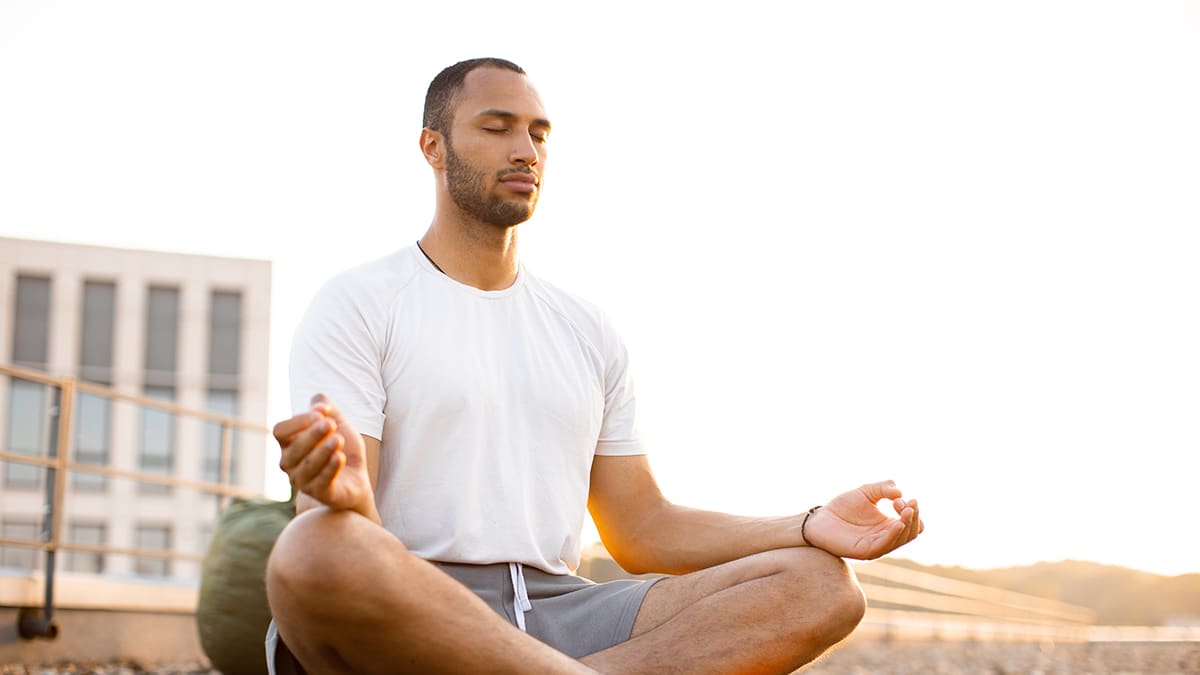
4 simple ways to give vagal toning a go
1. Breathe in and exhale slowly
Deep, mindful breathing is one of the simplest ways to calm down in moments of stress. Try inhaling for four seconds, holding for four, and exhaling for six.
2. Stroke your arms
A recent study on chronic stress found that touching your body in a soothing manner can reduce moment-to-moment stress, fatigue and even loneliness. Try gently massaging your feet, stroking your arms and the area around your neck.
3. Do a round of ‘omms’
In Hindu philosophy, ‘Om’ serves as a sonic representation of the divine. A small study found that chanting it for just five minutes was linked to physical signs of relaxation, suggesting it shifts the body into a calmer, more restful state.
4. Watch your favourite sitcom
We know that when we laugh, we stimulate our vagus nerve, as it induces deep breathing. But hearing laughter can also have a calming effect, according to one 2018 study. Next time you’re facing a high-pressure client pitch, bookend the Zoom meeting with a classic episode of Friends to unwind afterwards.