
Ask Dr. Adam: Food Scoring Apps and the Science


Food scoring apps are increasingly shaping consumer decisions. Scan a barcode, receive a score, and make a judgement. They are presented as objective tools that simplify nutrition into something instantly understandable.
Yet while this appears empowering, food scoring apps are modern manifestations of an inherent scientific limitation: the attempt to reduce complex dietary decisions to a single metric.
To understand their strengths and weaknesses, context is essential.
A Brief History of Nutritional Scoring
The idea of allocating foods a “health score” is not new.
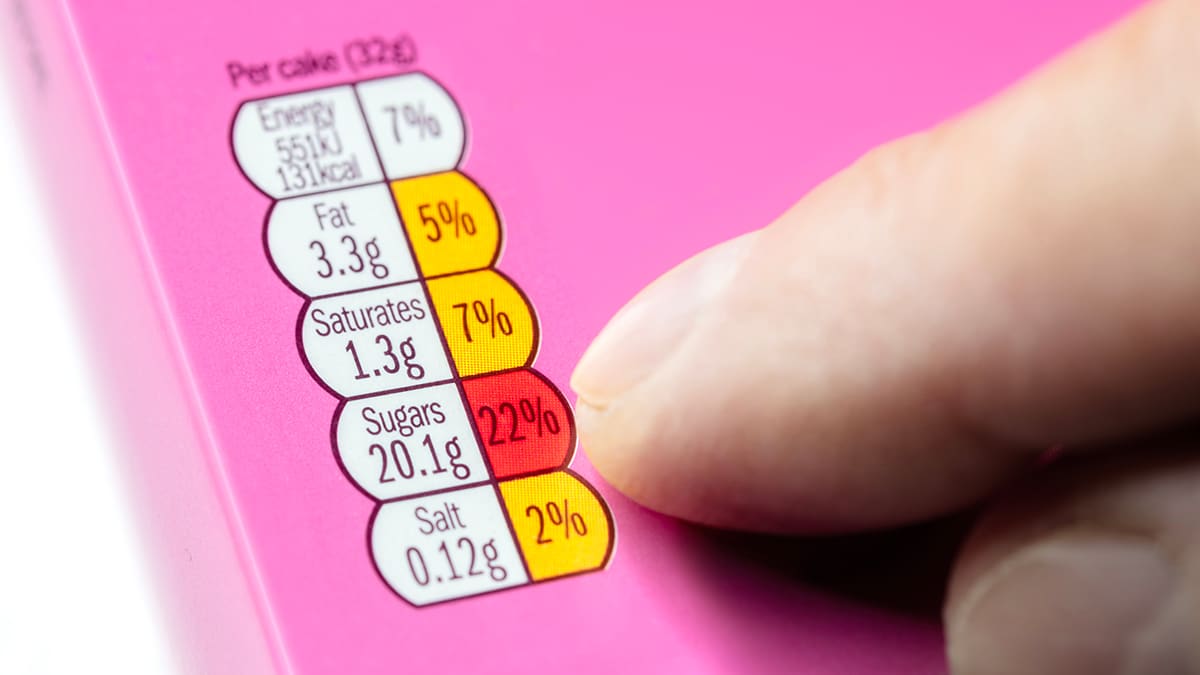
In the UK, the traffic light front-of-pack labelling system has been in place since 2005. It categorises foods as green, amber or red for total fat, saturated fat, sugar and salt, supported by mandatory back-of-pack nutrition information detailing the “big 8”.
From the outset, the system was criticised as simplistic and reductionist. It highlights selected negative nutrients and does not clearly account for energy density or overall dietary exposure. Nevertheless, it has improved public awareness and engagement with nutrition information.
In 2017, France introduced Nutri-Score, a more complex nutrient profiling algorithm. Nutri-Score incorporates negative components such as fat, saturated fat, sugar, salt and calories, alongside positive elements including fibre, protein and the proportion of fruit, vegetables, nuts and certain oils. It applies a graded colour scale with an underlying numerical score.
Nutri-Score remains one of the most studied profiling systems and has directly or indirectly influenced many modern food scoring apps.
The Role of Ultra-Processed Food Classification
Around the same time Nutri-Score emerged, Carlos Monteiro and colleagues in São Paulo introduced the NOVA four-group classification system, identifying “ultra-processed foods” as Group 4.
Importantly, early concerns focused less on processing itself and more on the properties associated with these foods. Ultra-processed foods tend to be hyper-palatable, convenient, inexpensive and nutrient-poor.
Yet this framing was not new. Dietary guidance since the 1980s has warned against foods high in fat, sugar and salt. In the early 2000s, these were formalised as HFSS foods. By their nature, HFSS products are energy-dense, highly palatable and easy to overconsume. These characteristics directly align with the nutrients penalised in both Traffic Light and Nutri-Score systems.
Modern food scoring apps combine these strands. They integrate nutrient profiling, additive penalties and often a proxy for industrial processing. In theory, this should support more informed decisions. In practice, important scientific and practical limitations remain.
Uses, Problems and Limitations of Food Scoring Apps
1. A Score Is Not a Diet
Most algorithms heavily weight sugar, total fat, saturated fat, salt and calories because of their established links with cardiovascular disease, obesity and type 2 diabetes.
This can be helpful when comparing similar products within a category. Choosing between two cereals or two snack bars based on sugar content is entirely reasonable.
However, these systems operate at the level of individual foods. Health operates at the level of the overall diet.
A product rated poorly may be eaten occasionally or in small amounts. A product rated highly may be consumed frequently and in larger quantities. Scoring systems cannot account for portion size, frequency of intake or cumulative dietary exposure over time.
They also cannot account for individual context. Activity level, metabolic health, clinical status, energy requirements and protein needs vary considerably. A product higher in protein and energy may be entirely appropriate for someone with elevated requirements due to illness, recovery or high training load. An algorithm may simply flag it as excessive, without recognising physiological need.
Another major limitation is scope. Most food scoring apps include macronutrients and salt but exclude micronutrients. This is largely because micronutrient data are not consistently available on packaging unless foods are fortified. As a result, consistently selecting high-scoring products does not guarantee nutritional adequacy.
Using these scores as a proxy for overall health impact is therefore scientifically unsound. Nutrition is determined by adequacy, balance and context across the whole diet, not by isolated nutrient thresholds within a single product.
2. Adding Processing and Additives into the Equation
Many food scoring apps penalise additives such as sweeteners, emulsifiers, colourings and flavourings. They may also downgrade foods based on industrial processing.
This reflects growing public concern around ultra-processed foods. However, the scientific evidence linking many additives to adverse health outcomes is inconsistent, dose-dependent and highly context-specific. Much of it derives from animal studies conducted at exposure levels above those typically consumed by humans.
More importantly, food formulation involves trade-offs.
If sugar is significantly reduced in a product, something must replace it. In some cases, this involves a very small quantity of a natural sweetener. An algorithm may penalise the presence of that ingredient, even if total sugar has been dramatically lowered.
The consumer then sees a lower score and may assume the product is less healthy than an alternative containing substantially more sugar.
In such cases, the score reflects the presence of an additive, but not necessarily the nutritional outcome. The meaningful comparison is not simply additive versus no additive. It is the broader nutritional trade-off.
Not all ultra-processed foods are nutritionally poor or unnecessary. Fortified foods can contribute meaningfully to fibre and micronutrient intake. Reformulated products can improve metabolic profiles. Blanket penalisation lacks nuance and oversimplifies the complexity of nutritional science.
3. The Broader Limitations of Scoring Systems
All food scoring apps have inherent limitations and should be interpreted with caution.
Scanning and evaluating individual foods ignores meal context and overall dietary pattern. We consume foods in combination, within meals and across days and weeks. Health outcomes reflect cumulative exposure and overall diet quality, not the isolated score of a single product.
Scoring systems are reductionist by design. They compress complex nutritional decisions into simplified metrics. This encourages binary thinking, categorising foods as good or bad, and placing products in competition based on a single numerical outcome.
When processing level or additive penalties are incorporated into the algorithm, this reductionism deepens. Foods containing small amounts of functional ingredients, such as sweeteners used to reduce sugar content, may be penalised, while alternatives with significantly higher sugar and energy content receive more favourable scores.
In such cases, the algorithm may reflect the presence of an “additive” more clearly than the overall nutritional trade-off.
This highlights the central issue: context matters. Replacing 20g of sugar with a minimal quantity of a natural sweetener is a nutritional decision that involves weighing risks and benefits. A scoring system may not adequately capture that nuance.
The inclusion of ultra-processed classifications can also introduce moralisation into food choice, elevating minimally processed foods as inherently virtuous and portraying additives as inherently harmful. The scientific evidence rarely supports such absolute framing.
Reliance on food scoring apps can lead to the gamification of food choice. Consumers may begin chasing higher scores in search of the “perfect” product rather than focusing on balance and dietary pattern. For some individuals, this creates a false sense of security. For others, it generates confusion, distrust or anxiety around everyday food decisions. In certain cases, it may contribute to traits associated with disordered eating.
A Balanced Perspective
Food scoring apps are most sensibly used as rough guides when comparing similar products within the same category.
They should not replace well-established, pattern-based dietary advice. Prioritising nutrient-dense foods, moderating overall intake of HFSS products, and focusing on long-term dietary patterns remain the most evidence-based strategies for supporting health.
Ultimately, food scoring apps are modern manifestations of an inherent problem: the desire to reduce complex dietary behaviours to a single metric. Nutrition cannot be meaningfully captured by a barcode scan alone.