
Five Muscle-Building Exercises Every Gym Beginner Should Master

Stepping into the gym for the first time can be a daunting prospect. Rows of complicated-looking machines, comically large weights, regulars who seem like they know what they’re doing – It’s no wonder that stats suggest 1 in 5 people find the gym intimidating.
But building a beginner workout routine that actually delivers results doesn’t have to be rocket science, particularly when it comes to building muscle. The key is to start simple and smart.
“My recommendation for beginners is to opt for machines rather than free weights, because they’re a great way to help keep your form in check,” says leading personal trainer Tyrone Brennard, who runs Be The Fittest. “They’re built to guide you into the right path of motion, so they’re easier to figure out than complex free-weight lifts.
“There’s less risk of injury too, because if you can’t lift the weight, the machine will safely return you to the position where you started. Whereas, if you’re using heavy dumbbells and you’re doing something like a chest press on a bench, and you can’t handle the weight, it could fall and injure you.”
Here, the PT unpacks five foundational machines that target major muscle groups and can form the basis of a solid full-body beginner’s workout routine.
Leg press machine
Works: Glutes, quads, hamstrings.
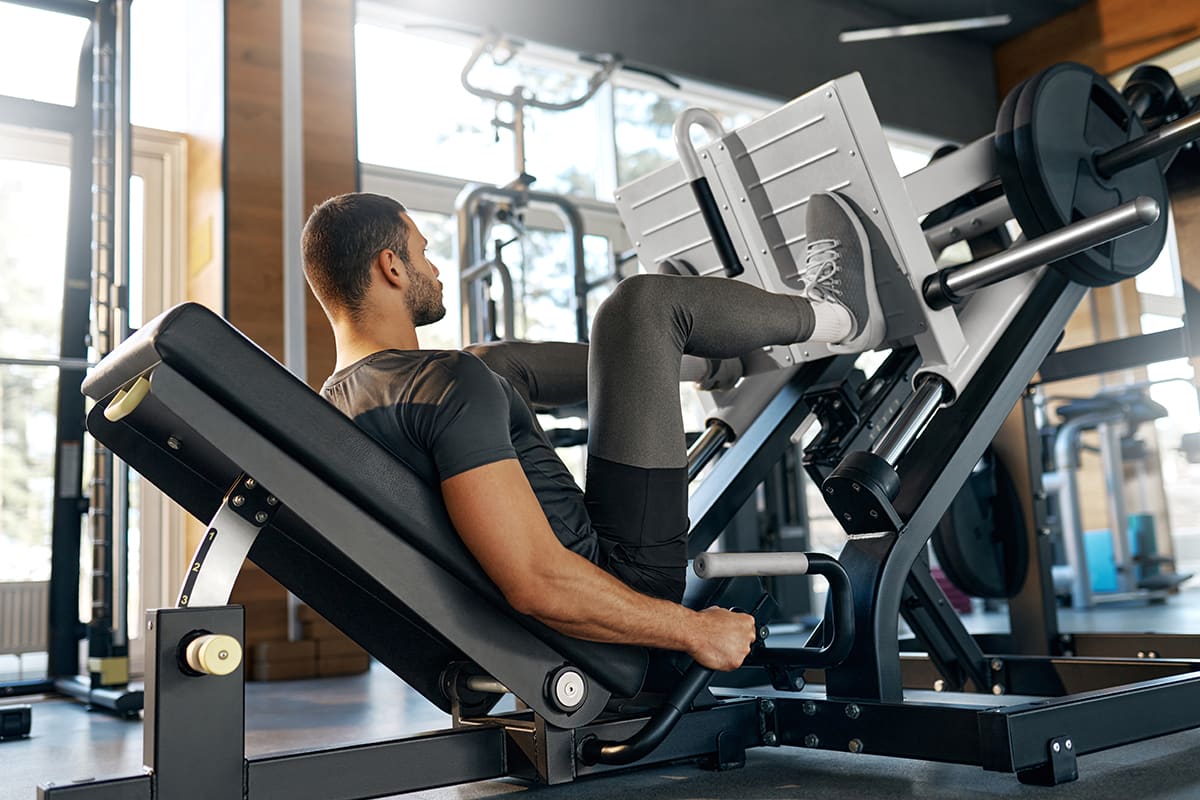
The leg press follows a movement pattern similar to a squat, making it one of the most effective exercises for targeting the lower body. As a compound movement, it works several major muscle groups at once, while carrying a lower risk of injury than free-weight exercises like barbell back squats, front squats and walking lunges.
“With the leg press, you’re pushing through the main glute muscles; the glutes, quads and hamstrings are all working together in one movement,” says Brennard. “From there, you can also shift the focus to isolate specific muscles. If you want to target the quadriceps, which are the front of the thighs, the leg press is something I’d definitely recommend.”
How to do it: Sit back in the seat with your feet shoulder-width apart on the platform. Lower the weight under control until your knees are bent, then press through your heels to return to the starting position without locking out your knees.
Hamstring curl machine
Works: Hamstrings.
If you’re looking to build stronger, more toned legs, the hamstring machine shouldn’t be overlooked. This nifty bit of kit isolates the often unused muscles at the back of the thighs, allowing you to build up strength quickly. They’re a particularly great cross-training exercise for runners too, as having strong hamstrings can lower your risk of injury on the track.
“The hamstring curl machine is a good option for a full-body routine because it isolates the hamstrings, which don’t always get enough attention in compound lifts,” says Brennard. “By targeting them directly, you can build strength evenly through the legs and improve knee stability while reducing the risk of injury strains.”
How to do it: Adjust the pad so it rests just above your heels. Curl your legs up toward your glutes, pause briefly at the top, then slowly lower the weight back down with control.
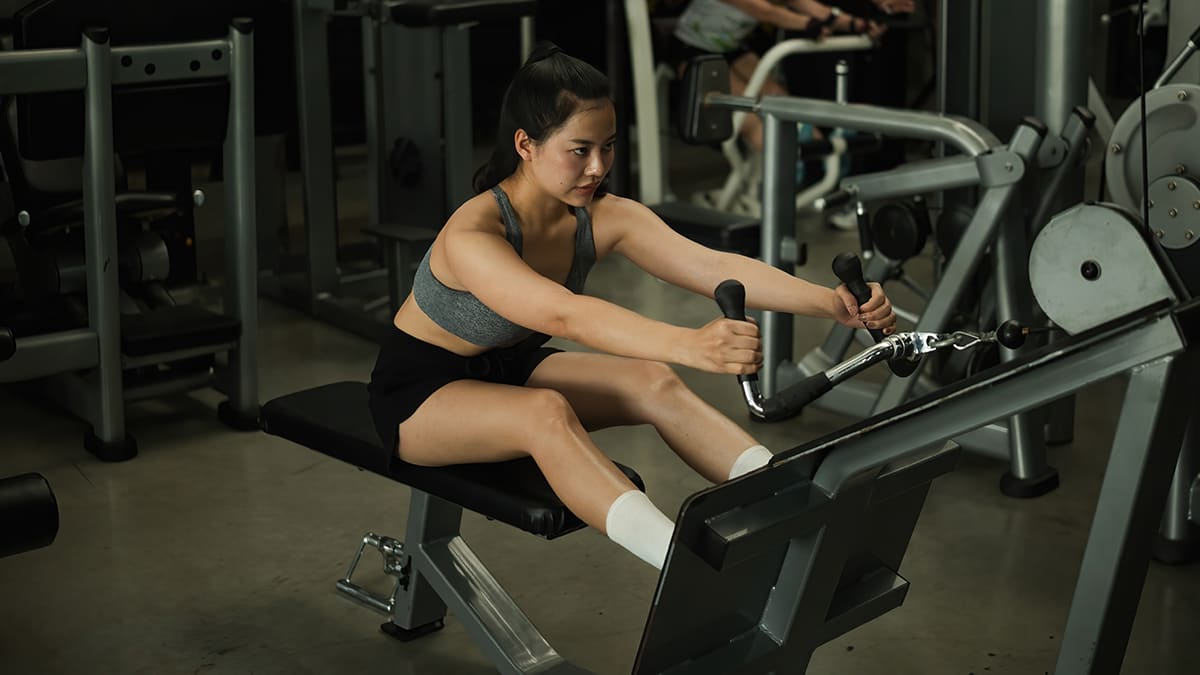
Seated cable row
Works: Back.
The seated cable row is an upper-body exercise that’s performed while sitting upright on a horizontal fixed cable machine with a bench and footplates for support. Pulling the weighted cable towards you strengthens the upper back, lats, traps, rear delts and rhomboids, while the challenge of staying balanced also works your core.
Brennard explains: “With the seated cable row, you’re working your back, which is the second biggest body part other than the legs – so it’s important to have a pulling exercise in your routine.”
How to do it: Sit tall with your chest up and grab the handle with both hands. Pull the handle toward your torso, squeezing your shoulder blades together, then slowly return to the start without leaning back.
Chest press machine
Works: Chest, triceps, front shoulders.
Rather than risk lying on a bench with a barbell nervously wobbling overhead, the chest press machine removes the need for spotters when training your pecs, making it easier to safely maintain proper form. You don’t have to worry about the bar drifting or losing control at the bottom of the lift.
“A solid chest movement is essential because it builds upper-body pushing strength that carries over into so many other exercises and everyday movements,” notes Brennard. “The chest press machine lets you train that strength properly and safely. That way, you can focus on working the chest and shoulders without worrying about getting stuck underneath.”
How to do it: Adjust the seat so the handles line up with the mid-chest. Press the handles forward until your arms are extended, then lower them slowly back to the starting position under control.
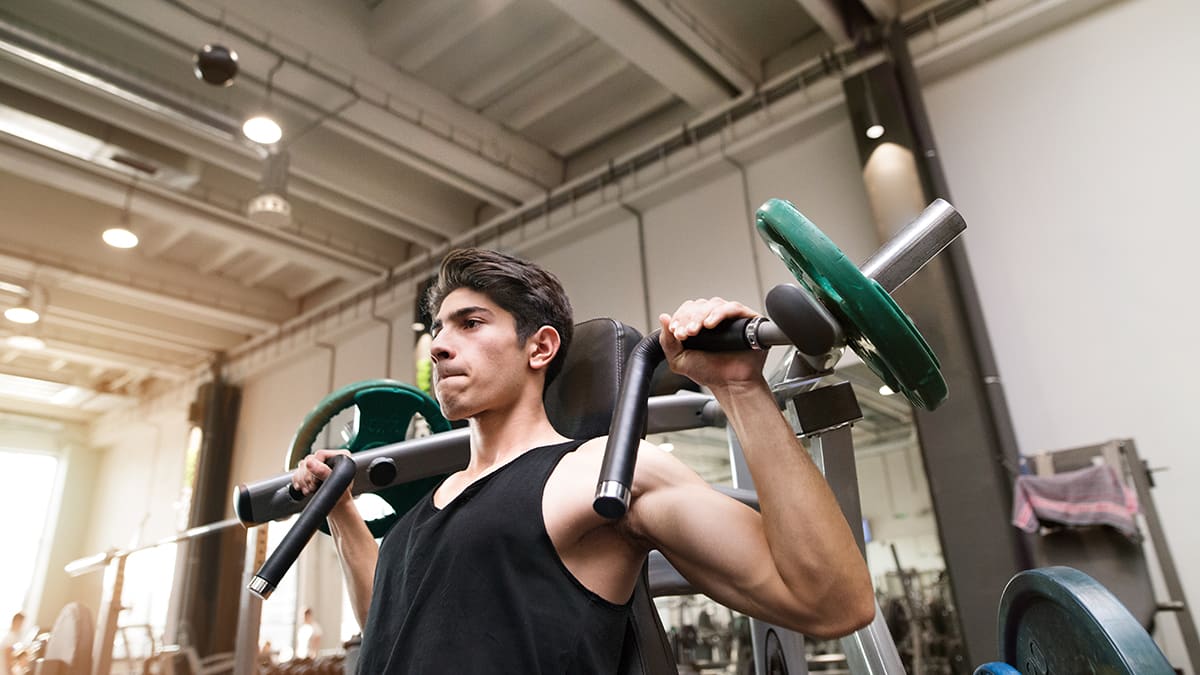
Shoulder press machine
Works: Shoulders, triceps.
Often overlooked in favour of focusing on chest work, the shoulder press machine is a secret weapon for building balanced upper-body strength. Its controlled overhead pressing motion hits the deltoids, developing strong, stable shoulders, and the fixed movement path makes it easier to maintain proper form without putting your lower back at risk.
“The shoulder press covers overhead strength, which is something a lot of people miss,” Brennard says. “When you’ve got legs, a pull for the back, and pushes for the chest and shoulders, you’re ticking off all the major movement patterns. That’s how you build a well-rounded strength routine.”
How to do it: Sit with your back firmly against the pad and hands on the handles. Press the weight overhead until your arms are nearly straight, then lower slowly back to the start.