
Ask Dr Adam: What Does Creatine Actually Do in Your Body?

Creatine is having a moment. Once the preserve of competitive athletes and bodybuilders, it has quietly crossed over into the mainstream, showing up in gym bags, kitchen cupboards, and increasingly, the wellness routines of people who would never have considered it a few years ago. But for all the noise, the basic biology often gets lost.
To understand why creatine works, and whether it is worth taking, you first need to understand what it is actually doing in your body. We asked Dr Adam Collins to walk us through the mechanisms, the evidence, and what it all means in practice.
So what is creatine, exactly?
Creatine is a protein found almost exclusively in muscle tissue, both skeletal muscle and heart muscle, with smaller amounts in the brain. Its primary job is in fast energy production, specifically its ability to rapidly recycle ATP, the cell’s main energy currency.
Here is how it works. When ATP is available, creatine picks up a phosphate group to become creatine phosphate (CrP). When your muscles need energy quickly, CrP can donate that phosphate back almost instantly to regenerate ATP. “It is a very rapid energy buffer,” explains Dr Adam. “The issue is that this system runs out very quickly, typically within seconds. Which is precisely why having more creatine in the muscle is advantageous.”

Where in the muscle does it matter most?
Creatine is particularly concentrated in type II muscle fibres, commonly called fast-twitch muscle. These fibres generate faster, more powerful contractions and rely heavily on creatine to fuel brief explosive efforts. Think sprinting, jumping, heavy lifting.
But creatine plays a meaningful role in slow-twitch, endurance muscle too. In type I fibres, it helps transport ATP out of the mitochondria and into the part of the muscle cell where muscle contraction happens, supporting the kind of sustained, efficient energy output needed for long runs or cycling. “People assume creatine is only relevant for power athletes,” Dr Adam notes. “But its role in ATP transport means it has relevance across a much broader range of activities than most people appreciate.”
Where does the body get creatine from?
The body maintains creatine levels in two ways. The first is internal synthesis: the liver can produce creatine from scratch, using three amino acids, glycine, arginine and methionine. This assumes you are getting adequate protein from your diet.
The second route is dietary intake, and here things get interesting. Creatine is found almost exclusively in animal muscle tissue, primarily red meat and, to a lesser extent, dairy. “Unless you are eating kilograms of meat per day, dietary creatine intake is not going to be high even for omnivores,” says Dr Adam. For vegetarians and vegans, the picture is starker: dietary creatine is essentially zero.
This is the rational case for supplementation. And it applies more broadly than most people assume.
How should you approach supplementing?
There are two established strategies: a loading phase followed by maintenance, or a slower steady approach.
The loading protocol involves taking around 20g per day for five to seven days, split into four doses to avoid gastric discomfort, before dropping to a 5g daily maintenance dose. This brings muscle creatine levels up quickly, which is useful if you have a specific training goal or competition on the horizon.
The alternative is simply taking 5g per day from the start. “By the end of four weeks, muscle creatine levels are similar regardless of which strategy you use,” Dr Adam explains. “If you are not in a rush, the slow-and-steady approach works just as well, and may be preferable for those who are sensitive to changes in body weight.” The fluid-related weight gain associated with loading is typically one to two kilograms, albeit often temporary; skipping loading means this happens gradually over several weeks instead, making it far less noticeable.
A note on dosing: body size matters. Some guidance suggests 0.3g per kilogram of body weight per day as a more nuanced daily dose, particularly relevant when comparing lighter individuals with heavier ones.
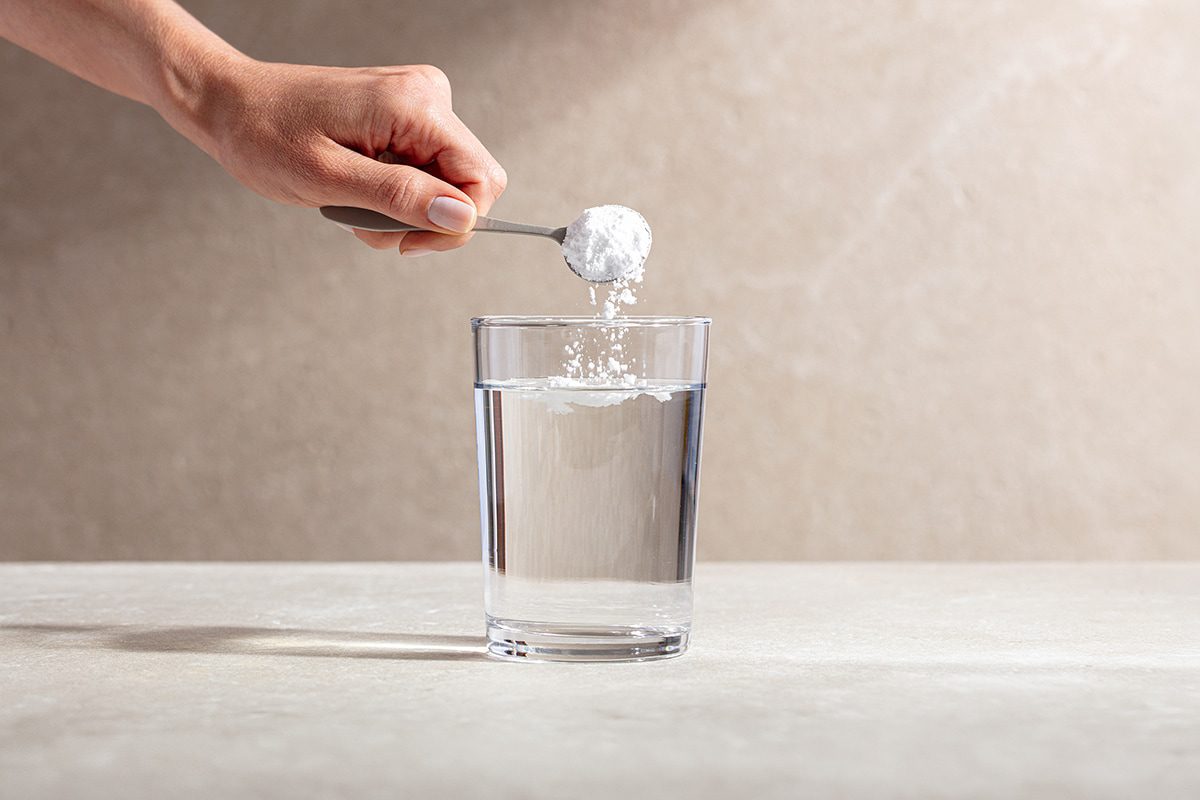
Form’s creatine monohydrate is unflavoured and mixes cleanly, which makes it easy to add to a post-workout shake or stir into water alongside a meal.
The bottom line
Creatine is not a shortcut. It does not produce an instant effect like caffeine. Its benefits come from gradually increasing the muscle’s creatine stores over days and weeks, giving your muscles more capacity to work hard and recover well. The biology is well understood, the evidence base is extensive, and the case for supplementing, especially if you eat little or no meat, is strong.
You can find Form Creatine here – highly micronised for smooth, grit-free mixing, Informed Sport Certified, with no fillers, no additives and no plastic packaging.
References
- Brosnan JT, Brosnan ME. Creatine: endogenous metabolite, dietary, and therapeutic supplement. Annu Rev Nutr. 2007;27:241–261.
- Harris RC, Söderlund K, Hultman E. Elevation of creatine in resting and exercised muscle of normal subjects by creatine supplementation. Clin Sci (Lond). 1992;83(3):367–374.
- Forsberg AM, et al. Muscle composition in relation to age and sex. Clin Sci (Lond). 1991;81(2):249–256.