
What Does Good Recovery Actually Look Like?


There is a particular kind of person who tracks every training metric obsessively but treats recovery as a loose afterthought. They log sets, reps, and split times with precision, then sleep five and a half hours, skip breakfast, and wonder why their progress has stalled. If this sounds familiar, you are not alone, and you are leaving a significant amount of adaptation on the table.
Recovery is not the absence of training. It is where the actual work happens. The exercise stimulus breaks muscle fibres down; recovery is the process by which the body repairs, rebuilds, and comes back stronger. Without adequate recovery, training becomes a cycle of accumulated fatigue rather than progressive adaptation. And yet, in a fitness culture that still quietly prizes grinding over resting, recovery tends to be discussed as a nice-to-have rather than a non-negotiable.
The good news is that most of what works is not complicated or expensive. Here is the hierarchy of recovery tools, ranked broadly by evidence, and how to build a practice that matches your actual training load.
What happens in your body when you recover?
Exercise, particularly resistance training and high-intensity cardio, creates microscopic damage to muscle fibres and depletes glycogen stores. In the hours and days that follow, the body triggers a repair cascade: satellite cells migrate to damaged tissue, pro-inflammatory signals initiate healing, and protein synthesis rates rise to rebuild fibres thicker and stronger than before.
This process is not passive. It requires raw materials (primarily protein and carbohydrate), hormonal conditions that favour repair over breakdown (which is why chronic stress undermines recovery), and time. Attempting to train again before this cycle completes does not just reduce the benefit of the next session; it can create a cumulative deficit that shows up weeks later as stalled progress, persistent soreness, or injury.
Understanding this makes recovery feel less like laziness and more like strategy.
Sleep: the tool nothing else can replace
If recovery were a hierarchy, sleep would sit at the top by a considerable margin. The majority of muscle protein synthesis, the biological process of building new muscle tissue, occurs during sleep, particularly during slow-wave deep sleep. Growth hormone, the primary anabolic hormone driving tissue repair, is released in pulses during these deeper stages. Inadequate sleep does not just leave you tired; it directly compromises the repair process that training is designed to trigger.
The research here is unambiguous. A well-cited Stanford study with basketball players found that extending sleep led to faster sprint times, improved shooting accuracy, and significantly lower injury rates. For anyone who trains regularly, sleep quality is arguably the single most important recovery variable, and the one most consistently underserved.
Seven to nine hours is the target for most active adults. Room temperature between 16 and 18 degrees Celsius, complete darkness, and avoiding vigorous exercise within two hours of bedtime all support deeper, more restorative sleep. Caffeine has a half-life of around five to six hours, which means a 3pm coffee is still partially active at 9pm. If sleep quality is an issue, that is the first variable worth addressing.
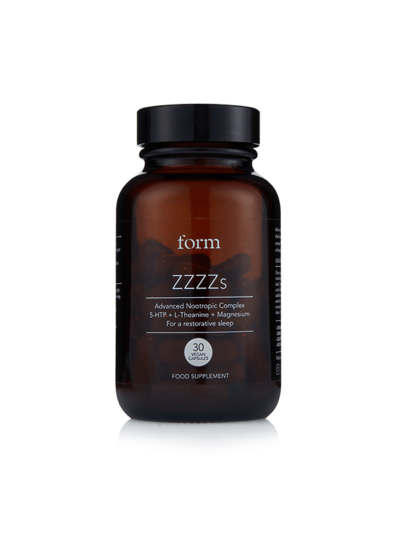
For nights when sleep is genuinely difficult, a natural sleep supplement like ZZZZs can support the transition into rest without the dependency risks associated with prescription sleep aids.

Nutrition: the raw material of repair
Recovery nutrition is not complicated, but timing and composition both matter more than most people appreciate. Protein and carbohydrate consumed in the period immediately following exercise, particularly within the first hour, have been shown to accelerate muscle recovery, glycogen resynthesis, and the reduction of post-exercise fatigue compared to delayed intake.
For protein specifically, the evidence supports consuming 20-40g of high-quality protein in the post-workout window, with research consistently pointing to leucine content as a key driver of muscle protein synthesis. Active individuals generally benefit from a total daily protein intake of around 1.4-1.6g per kilogram of bodyweight, spread across meals rather than concentrated in one sitting.
Carbohydrates are equally important and often overlooked in recovery conversations dominated by protein. Glycogen, the stored form of carbohydrate in muscle tissue, is the primary fuel for moderate to high-intensity training. Replenishing it after exercise is essential, particularly if you train on consecutive days. A combination of protein and carbohydrate post-workout is consistently more effective for recovery than protein alone.
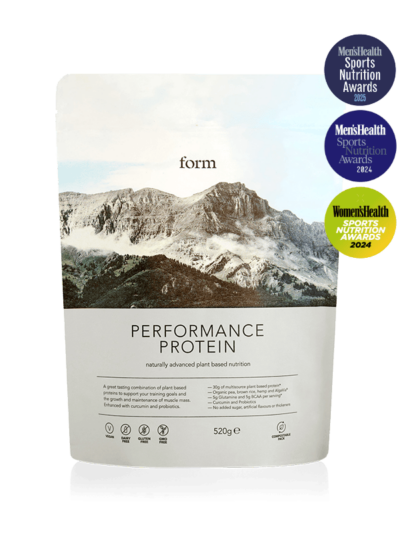
Form’s Performance Protein is formulated with curcumin and digestive enzymes alongside its protein content, which makes it a practical post-workout option: the curcumin has evidence for reducing exercise-induced inflammation, and the digestive enzymes support absorption when the gut is under post-exercise stress.
Active recovery: moving to repair
The instinct after a hard training session is often to do nothing. This is understandable, but low-intensity movement on recovery days is generally more effective than complete rest for clearing metabolic waste products, reducing stiffness, and maintaining blood flow to repairing tissue.
Active recovery does not mean another workout. It means a 20-minute walk, a gentle yoga or mobility session, a slow cycle, or light swimming. The intensity should be low enough that you finish feeling better than when you started. Heart rate should stay well below 70% of maximum. The goal is circulation and movement, not stimulus.
This is also where training day versus rest day nutrition becomes relevant. Active recovery days still benefit from adequate protein; the carbohydrate requirement simply decreases in line with lower energy expenditure.

Cold and heat: useful tools, not magic
Cold-water immersion has probably the strongest evidence base of any physical recovery modality beyond sleep and nutrition. Research consistently shows it reduces delayed onset muscle soreness (DOMS) and subjective fatigue, likely through a combination of reduced inflammation, decreased nerve conduction velocity, and improved circulation upon rewarming. A cold shower is not the same as full immersion, but face and limb exposure to cold water still produces some benefit.
It is worth noting that contrast therapy, alternating cold and heat exposure, is gaining traction in both elite and recreational settings, and the evidence here is reasonably promising for reducing soreness and improving perceived recovery.
Heat, via sauna or hot bath, has different but complementary effects: it increases blood flow, reduces muscle tension, and has emerging evidence for cardiovascular benefits with regular use. Where cold reduces acute inflammation, heat promotes circulation and parasympathetic relaxation. Neither is a substitute for sleep and nutrition, but as adjuncts to a solid foundation, both have their place.
The higher-tech end of the recovery market, including compression boots, red light therapy, and hyperbaric oxygen, has considerably less robust evidence. A 2026 review found that red light therapy showed some benefit for DOMS in the first 48 hours but no effect beyond that. Compression garments show modest benefits for subjective recovery. These tools are not without merit, but they are operating at the margin: useful refinements for people whose fundamentals are already dialled in, not shortcuts past them.
How much recovery do you actually need?
The honest answer is that it depends on your training load, age, sleep quality, stress levels, and nutrition. There is no universal formula. What is clear is that most recreational exercisers err on the side of too little recovery rather than too much, and that signs of underfuelling and under-recovering often look similar: persistent fatigue, stalled progress, elevated resting heart rate, and a general flatness that does not respond to more training.
A rough framework: for most people training three to five times per week at moderate to high intensity, at least one to two full or active recovery days is the minimum. Sleep should be treated as a non-negotiable training variable, not a flexible one. Post-workout nutrition should be deliberate rather than an afterthought. Cold or heat exposure can be added around the edges once the basics are consistently in place.
The most effective recovery practice is not the most elaborate one. It is the one that addresses the fundamentals consistently, week after week, in proportion to how hard you are actually training. Which, as it turns out, is exactly the kind of unglamorous discipline that produces results.