
How the Chinese Art of Arm Swinging Could Help to Reset Your Nervous System
Every day, as the sun rises in Beijing’s Temple of Heaven Park, hundreds of retirees gather on a concrete forecourt to rhythmically swing their arms together in meditative silence. It’s an unusual morning ritual that’s been a staple of natural third spaces in major cities across China for decades.
Collectively, they’re practising what’s known as Shuai Shou Gong, a type of limb rotating exercise that’s said to invite more ‘Qi’ into your life – a type of vital energy force that’s a major tenet of Traditional Chinese Medicine.
If you’ve been scrolling TikTok recently, there’s a good chance you’ll have come across the practice not just amongst China’s ageing population, but in the living rooms and home gyms of ultra-fit wellness influencers.
The unique thing about this growing fitness trend is that it’s not about pushing your body to the absolute limit, but gently inviting more movement, mobility and blood flow into the first few moments of your day. Here we break down what you need to know, with some expert advice on how to get started.
What is Shuai Shou Gong then?
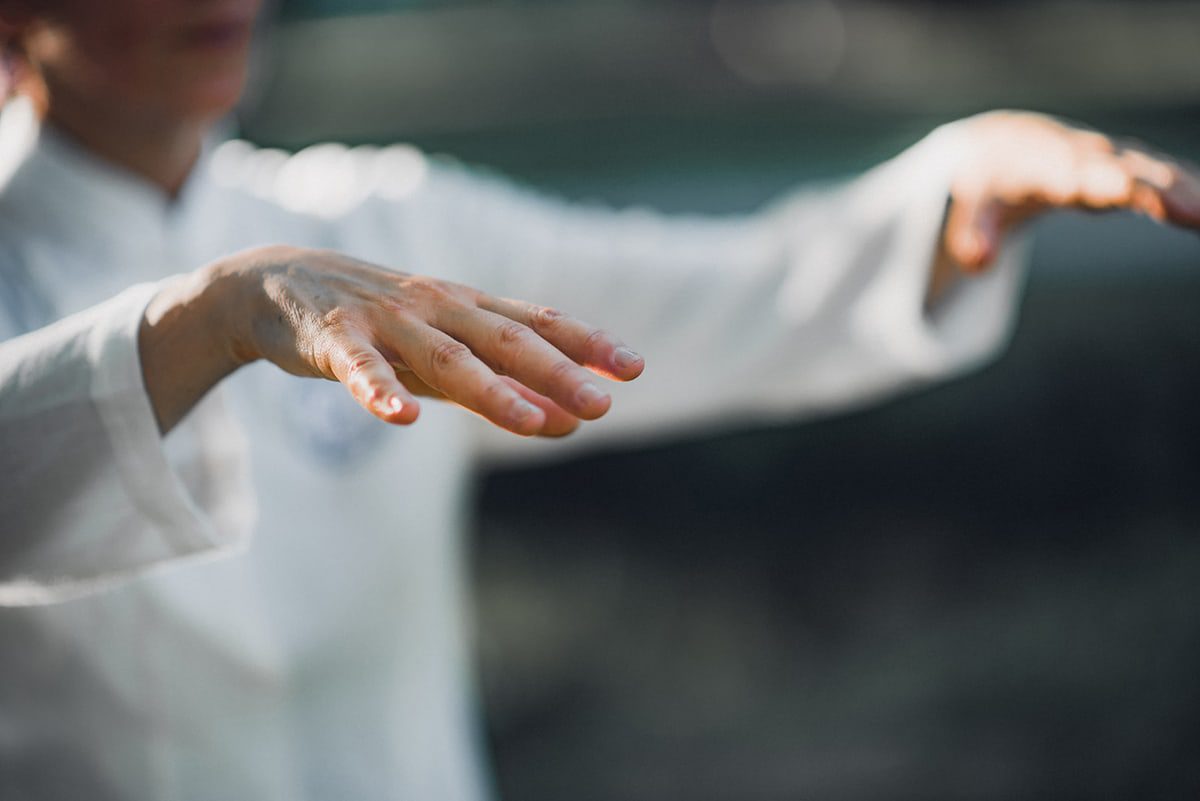
The Chinese health practice, which translates to ‘swinging hand exercise’, is the latest new-but-old longevity biohack to emerge from Eastern medicine. The simple technique, which involves grounding your feet slightly apart and swinging your arms to shoulder level and back again, has a history that extends back more than 1,000 years, as part of the country’s spiritual Qigong tradition.
In recent years, you might have noticed a growing buzz online around nervous system regulation – gentle exercises like face tapping, diaphragmatic breathing and soothing self touch that can help shift the body from a state of stress to safety.
Shuai Shou Gong takes things one step further as it’s all about increasing your energy levels as you simultaneously downshift the body from wired hyperarousal. “It belongs to a collection of ancient practices called ‘Yang Sheng’ – literally, ‘Nourishing Life’,” says Chinese medicine practitioner Dr. Maz Roginski.
“Modern research continues to uncover the many vital roles that the connective tissues of the fascia network play in our whole body health, but this is something that TCM has known for millennia.
“The alternative medical system suggests that we all have a meridian network – an invisible system of pathways, or channels, that circulate a vital energy called ‘Qi’ throughout our bodies. In TCM, movement practices like Shuai Shou Gong are believed to regulate these pathways for better circulation and a clearer line of communication along these information highways.”
What are the benefits of arm swinging in the morning?
From clearing brain fog and increasing focus to nixing joint pain and aiding better sleep, Shuai Shou Gong has anecdotally been linked to a host of benefits. And although there isn’t a wealth of peer-reviewed research to back up its claims, its most promising use-case is its potential to help us cope with the relentless stimuli of today’s always-on world.
As Roginski explains: “Rhythmic arm swinging and slow intentional breathing massages the vagus nerve – the longest cranial nerve in your body that starts in the brain and travels down the neck into the abdominal organs. It’s a key player in the ‘rest & digest’ branch of the autonomic nervous system that helps us settle down after stressful events.
“When we practice Shuai Shou Gong, it exercises and improves what’s known as vagal tone – the measure of how quickly and efficiently your body is able to calm down and relax,” Roginski continues. With 74% of us feeling so stressed we can’t cope, experts suggest that a daily practice could help us to avoid tipping into burnout – a chronic state of exhaustion that the World Health Organisation recently declared an occupational phenomenon.
As well as helping you manage a nervous system that’s stuck in survival mode, there’s scientific research to suggest that regular arm swinging can improve joint mobility – a useful skill for those who spend the majority of the day hunched over a laptop. A recent study on 56 women in their 60s and 70s found that practising the technique for 40 minutes, three times a week, not only improved their posture, but their flexibility and even basic walking speed too.
Beyond the physical though, all that vigorous morning movement could have benefits in the boardroom – with some proponents of the trend suggesting it could help us mull over problems more creatively. “People who practise Traditional Chinese Medicine believe that the bilateral movements of Shuai Shou Gong restore harmony to the hemispheres of the brain,” says Roginski.
“In the modern world, lots of us exist in left brain dominance. This is the rational, reasoning mind, that’s focused and task-orientated. In contrast, the right brain offers a more expansive experience. It’s the side that kicks into gear when we’re in states of mindfulness, creativity and relaxation.
Like Yin and Yang, Roginski believes that both left and right hemispheres serve important but contrasting functions, and that by striking a better balance through movement, we may be able to tap into more expansive thinking.
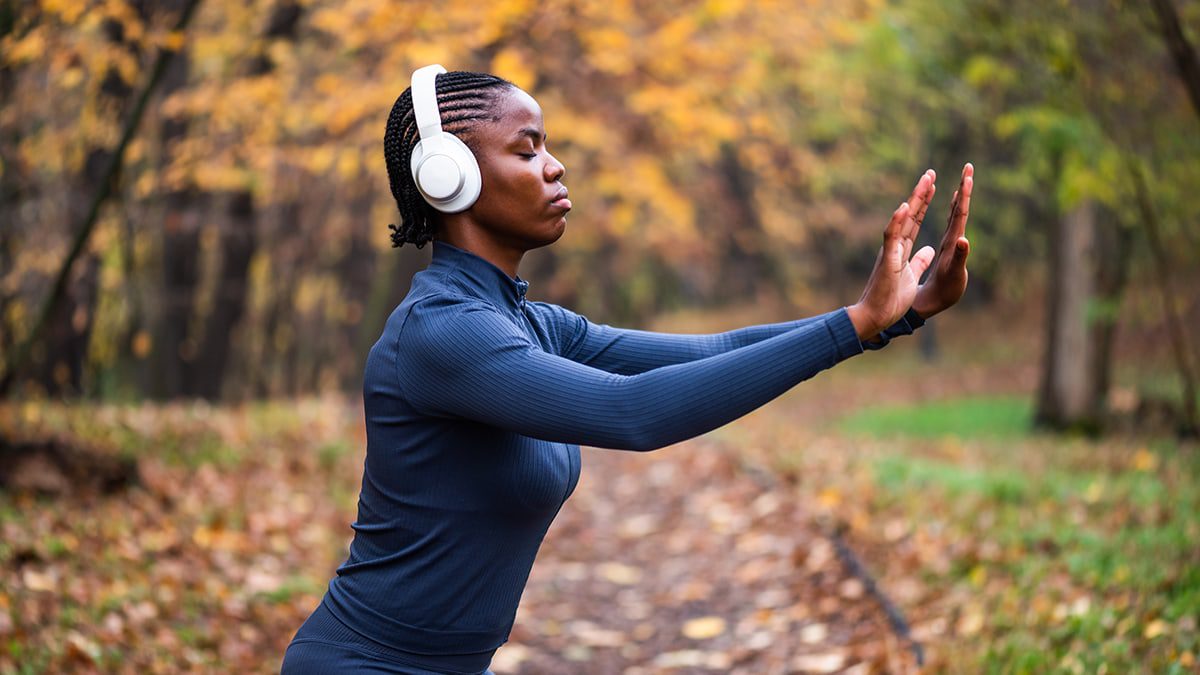
How can you get started with Shuai Shou Gong?
To reap the regular benefits, Roginski says it’s best to practice daily. “Just 10 minutes per session is enough to get started. I like to practice these types of exercises on waking, and after work, to ‘shake off’ the work day and reset for the evening,” she explains.
“Try standing relaxed, with feet hip-width apart, and swing your arms up to shoulder height, before letting gravity drop them back down, repeating at your own rhythm,” she instructs. “Every 5th swing, add a gentle knee bounce to bring more energy to the body.”
If you’re used to starting the morning by doomscrolling your emails, standing up and getting moving may feel awkward at first, but over time it can become as habitual as brushing your teeth or clicking on the coffee machine.
A final tip? Open the curtains to pair your drills with the circadian resetting benefits of drinking in natural sunlight, or better yet, be like a Beijing local and head to a nearby park. In doing so, you’ll shake off the remnants of last night’s sleep, all while soaking up some mood-boosting vitamin D at the same time.