
Is City Living Really Affecting Your Testosterone?

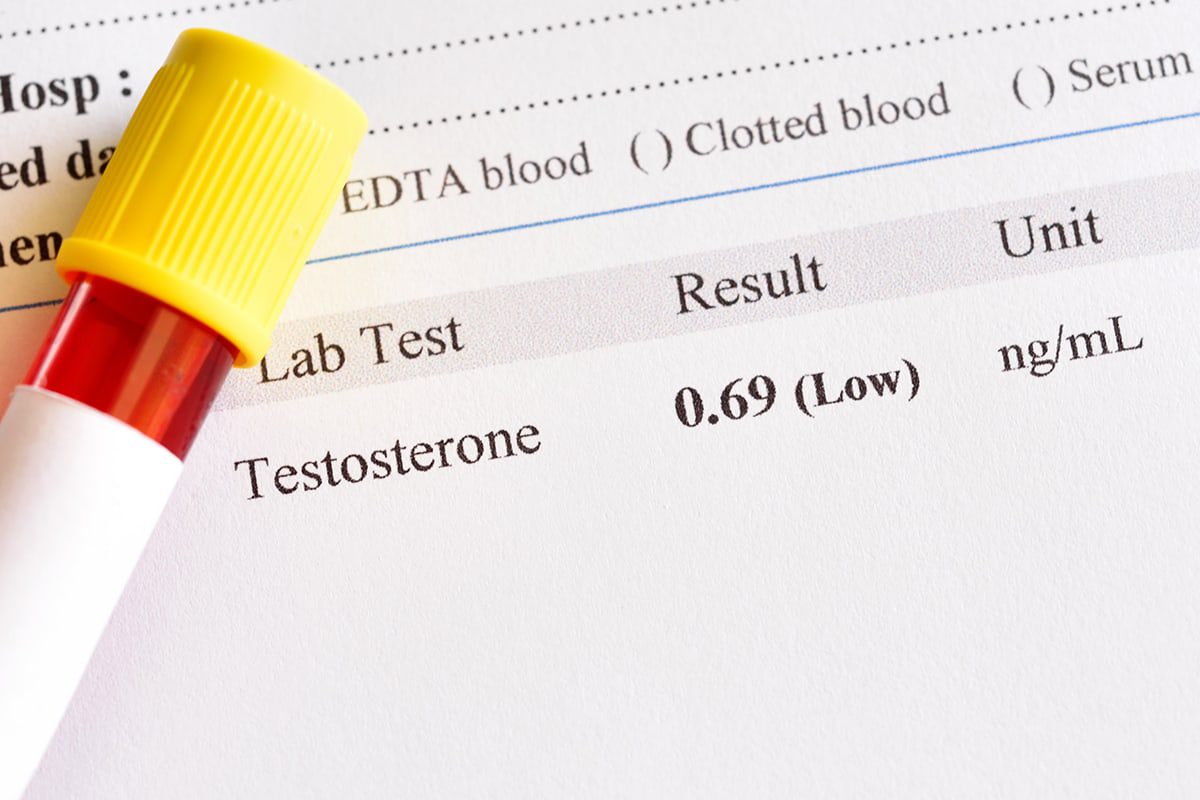
In the UK, we have reached peak testosterone. 2026 has already seen online searches for ‘low testosterone’ hit a five-year high. On the street, NHS data shows that prescriptions for testosterone have spiked by 135% between 2021 and 2024; and using the capital as an example, London’s exhausted commuters are unable to ignore impactful advertising campaigns across travel networks, where out-of-home displays from health platforms are suggesting that the usual feelings of irritability ‘might be low testosterone,’ and encouraging them to ‘get an at-home test.’
That said, irritability is just one symptom of potentially low testosterone. Others can include wider issues, such as brain fog, low mood and poor concentration, while more serious developments, including insomnia, short-term memory loss and gynaecomastia, are also experienced in guys dealing with ‘low T’. The reality, however, is that many of these issues can be easily written off as the invisible tax of metropolitan living. After all, with millions of people moving, working and commuting across 600 square miles, a city like London is hardly a place to achieve optimal hormonal balance. If it’s not high-pressure career paths that spike the stress hormone cortisol, it’s the commutes that eat into our evenings and many of us eating lunch at our desks or under office lighting. This level of attention on our internal systems is leading to an increasing number of twenty- and thirtysomething men in the capital starting to take a closer look at their testosterone and ask — is urban living exacerbating the issue?
An increased interest
Having worked across the NHS and the private sector, Dr. Oliver Rabie has seen this uptick first-hand. “Over the last four to five years, I’ve been seeing this more in younger men, most commonly in their 20s and 30s,” he says. Over this time, Rabie has noticed that it’s social media content, particularly podcasts and long-form video, that boosts this interest and often finds patients coming in “already thinking they have low testosterone,” he continues. “Increased awareness isn’t necessarily a bad thing, but it can lead people to focus on a single explanation for symptoms that are often multifactorial.”
A study from Northwestern University, published in the International Journal of Impotence Research, found that testosterone content on TikTok and Instagram is both wildly popular and largely inaccurate. Across both platforms, posts by non-medically trained users scored an average of 2.3 out of 5 on a verified accuracy index, while only 10.3% of TikTok posts and 12.9% of Instagram posts were from genuine physicians.
As the study proves, testosterone is a pervasive topic, but the effect of urban living on the hormone is a more complicated one. “I wouldn’t say that living in a city directly lowers testosterone,” Rabie says, but he explains that the capital creates the conditions for certain habits to take hold. He sees it most acutely in patients working in “law and finance”: high-intensity jobs that run late into the evening, leaving little room to decompress before sleep. “As a 24-hour city, it places significant demands on people’s time and energy.” Combined with the cortisol load of a long commute and an active social life, the behaviours that support healthy testosterone — consistent sleep, regular exercise, effective stress management — can get squeezed out. “I do see a strong link between lifestyle factors and symptoms in city-based patients,” says Rabie.
The more inconvenient truth, though, is that genuine low testosterone is less common than the surge in concern might suggest. “In my experience, the majority of people presenting with symptoms don’t have a true deficiency,” Rabie says. “More often, factors such as poor sleep, chronic stress, excess alcohol, or being overweight are driving those symptoms.”
The rise of online testing platforms
However, men experiencing these symptoms aren’t waiting for a GP appointment to find out where they stand. Online health platforms have made testosterone testing and treatment accessible, and their waiting rooms, virtual as they are, are filling up. “The men walking through our virtual door are overwhelmingly office-based, city-dwelling, and describing the same cluster of symptoms,” says Zak Zafrani, GP lead for Testosterone Deficiency at Numan.
Zafrani explains that a large share of what presents as low T is lifestyle in disguise. “In men under 40, a large proportion of cases that look like low testosterone are actually driven by lifestyle factors rather than permanent hormone failure,” he says, adding that true, irreversible testosterone deficiency is uncommon in younger men. While “the textbook patient is a man in his fifties or sixties,” Zafrani describes that younger men “are now far more attuned to symptoms they would once have written off as ‘just being busy’ or ‘getting older.’” As for whether living in a major city centre can be detrimental, Zafrani says: “Living and working in the majority of cities can increase exposure to factors that suppress testosterone, such as high workload, sleep disruption and higher exposure to air pollution.”

What to eat for higher levels of testosterone
Zafrani’s treatment is simple: improve sleep, cut alcohol, address stress, and get properly tested before reaching for a prescription. That, and taking a closer look at nutrition. However, as nutritionist Jenna Hope (RNutr, MSc, BSc) stresses, it’s not a cure-all. “Whilst nutrition isn’t the only component of supporting a healthy testosterone production, it does play a role,” she explains. “Consuming a healthy, balanced diet is a great place to start; however, a whole lifestyle approach is often necessary.”
“Green leafy vegetables, beans and pulses are high in magnesium and zinc all of which are important for testosterone production,” Hope continues. Crucially, each ingredient is widely available in plenty of popular lunch spots, from Farmer J to Pret a Manger and Tesco to Whole Foods. “Diet plays a significant role in the production of testosterone,” Hope continues. “Hormones are produced from the nutrients we consume through food and low nutritional intake can impact how testosterone is produced.”
As for Dr. Rabie, what would he tell a man in his thirties who’s tired, has a low libido and is convinced urban living is affecting him at a hormonal level? “I’d probably start by reassuring him that it’s unlikely it’s ‘destroying his hormones,’” he says. “Then I’d bring it back to the fundamentals of sleep, movement, nutrition, stress, and alcohol intake.” Unglamorous advice, perhaps, but most of the answers here are. “In many cases, people feel significantly better without needing any medical treatment at all.”